
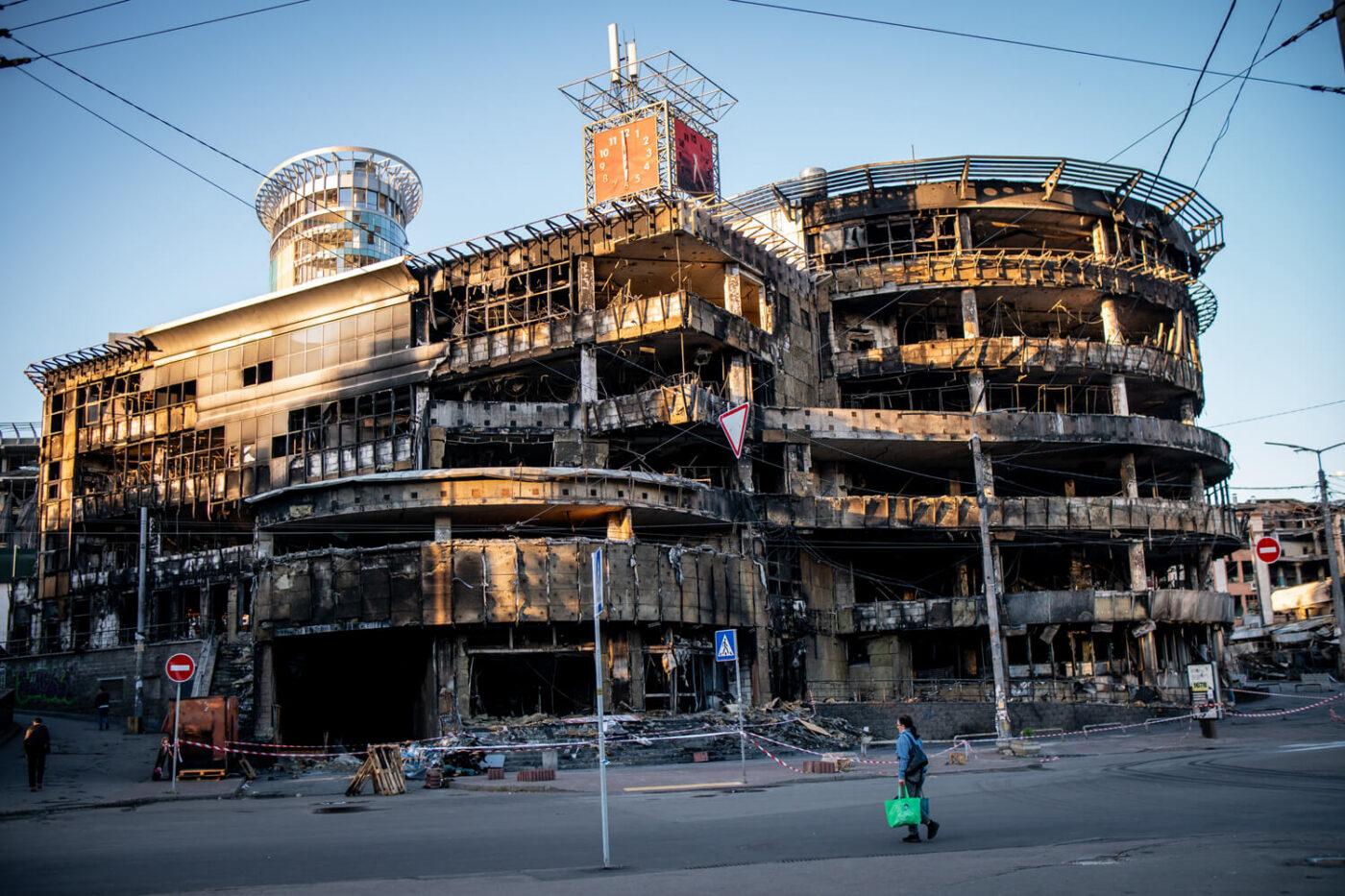
Kiev residents have been reading such reports for more than four years. Although such heavily concentrated attacks do not occur every night in the capital or other cities far from the front line, air raid sirens, explosions, and reports of destruction have long become part of the reality of war.
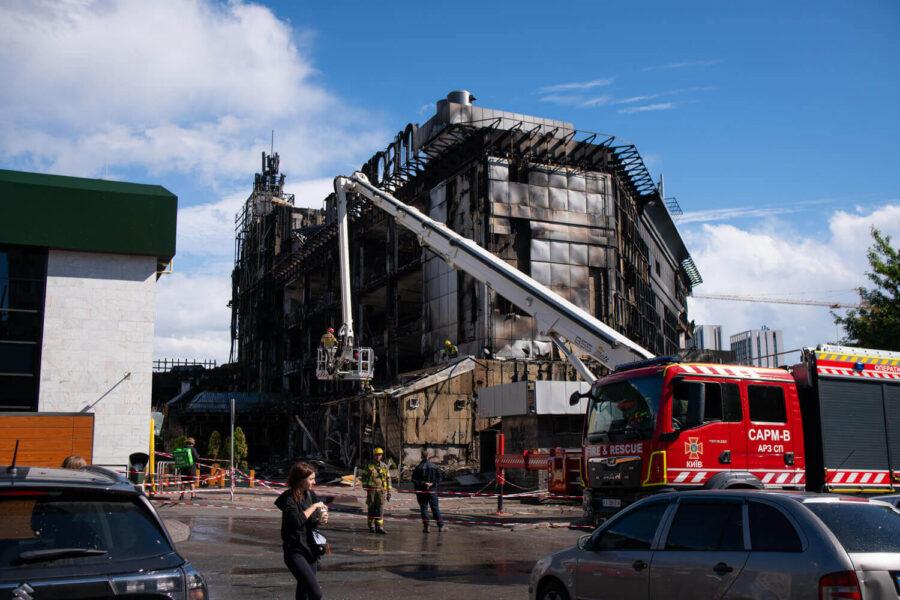
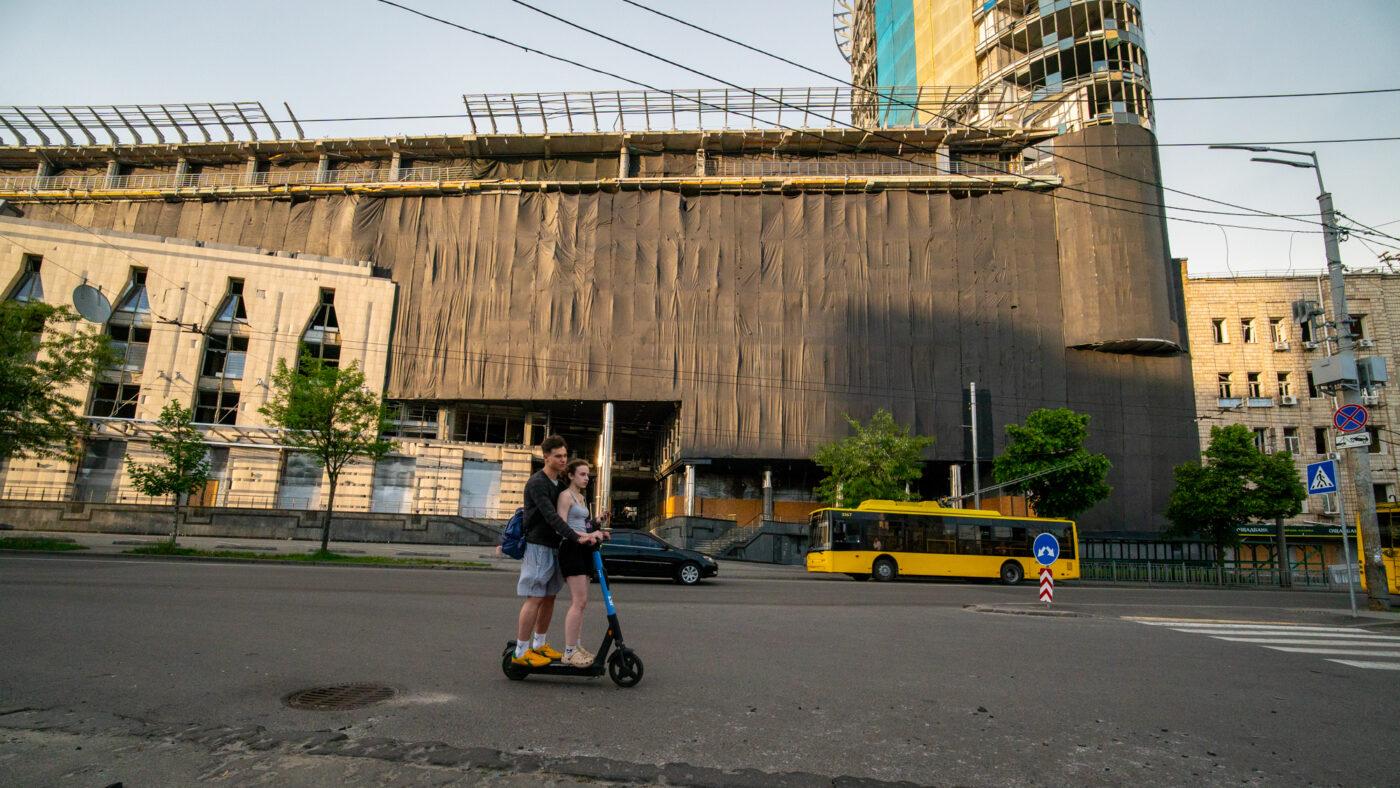
Before the full-scale war, this part of the city lived its usual rhythm: people would exit the metro, buy groceries at the Lukianivskyi Market, go into the “Kvadrat” shopping mall, and hurry to work or back home.
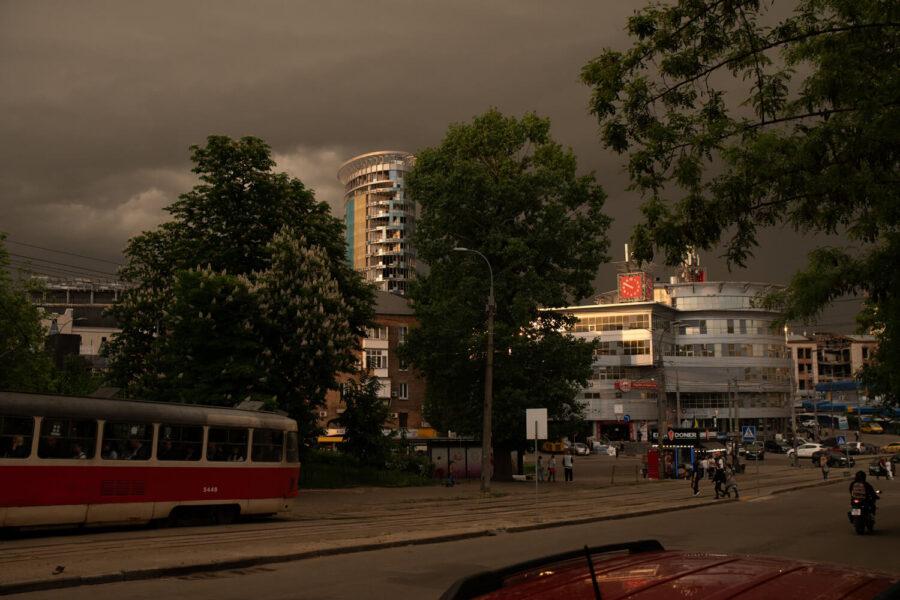
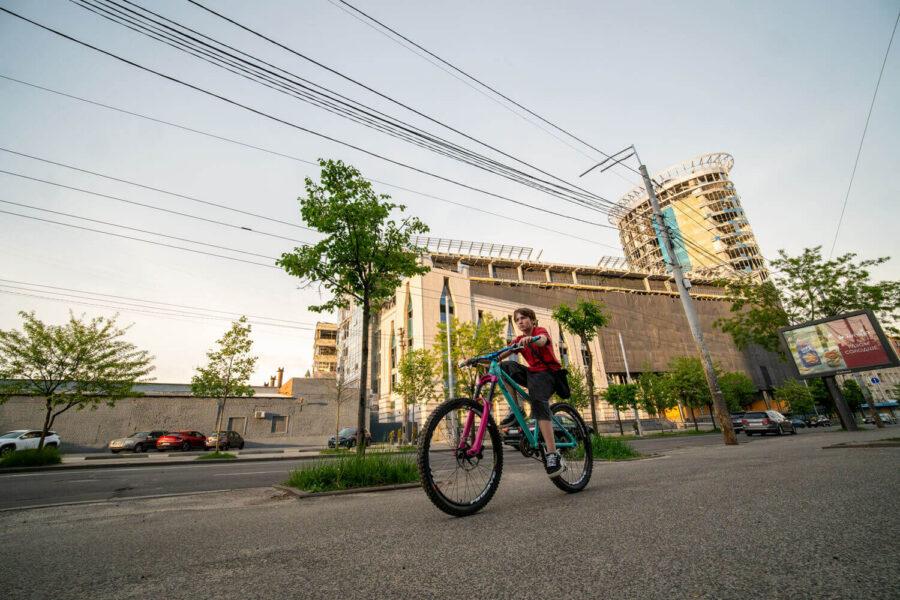
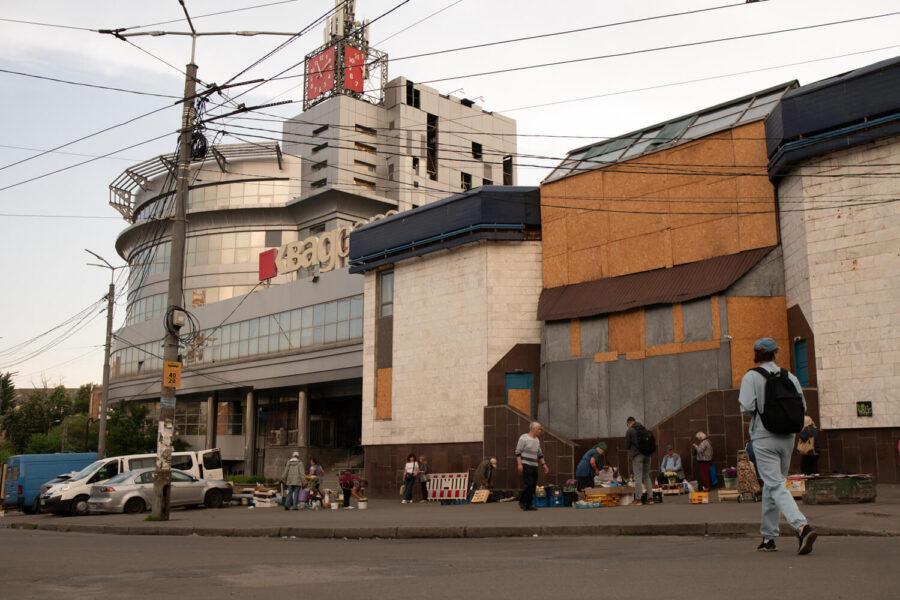
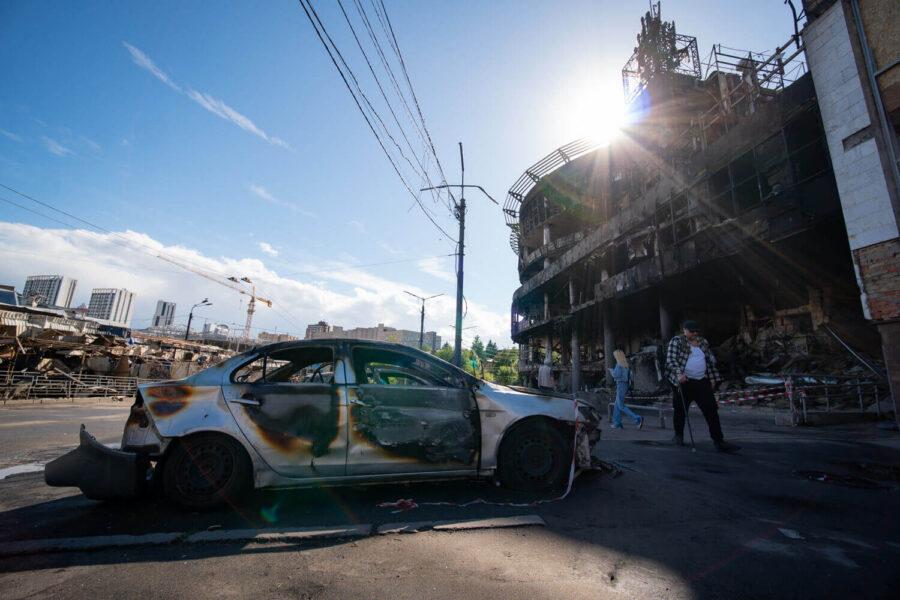
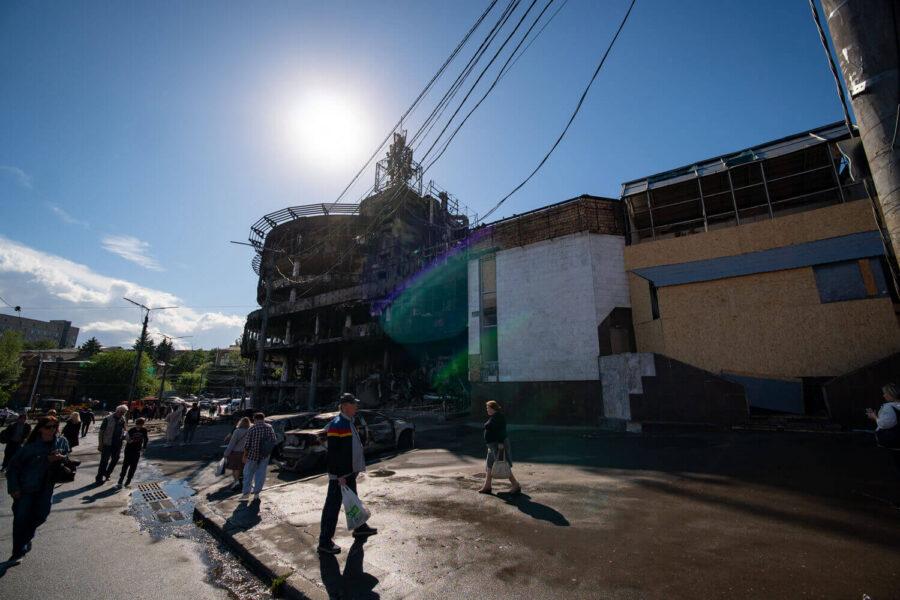
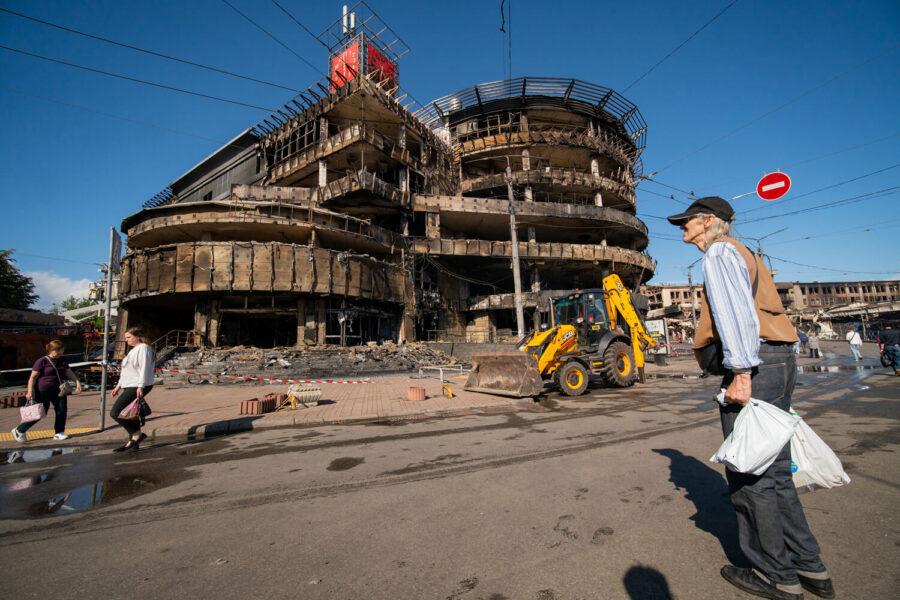
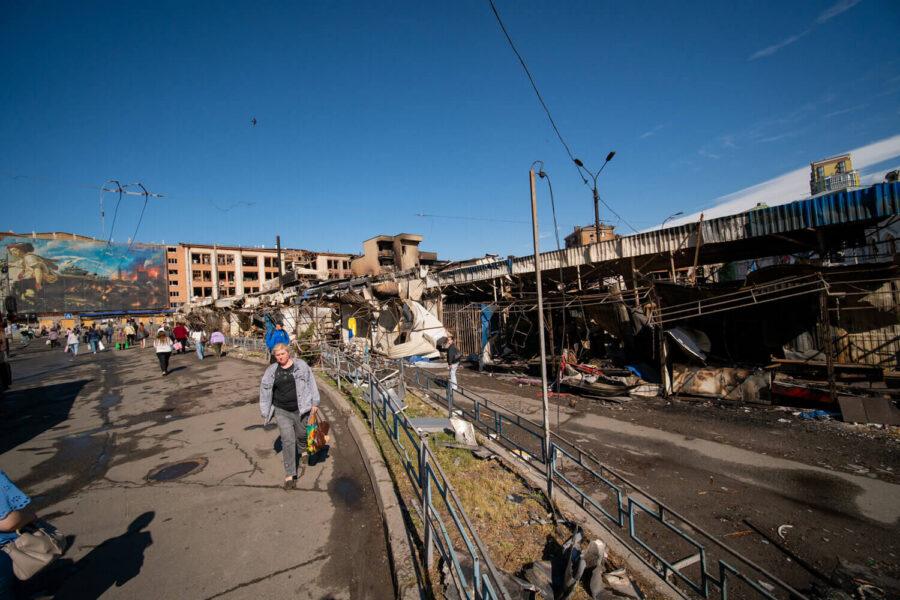
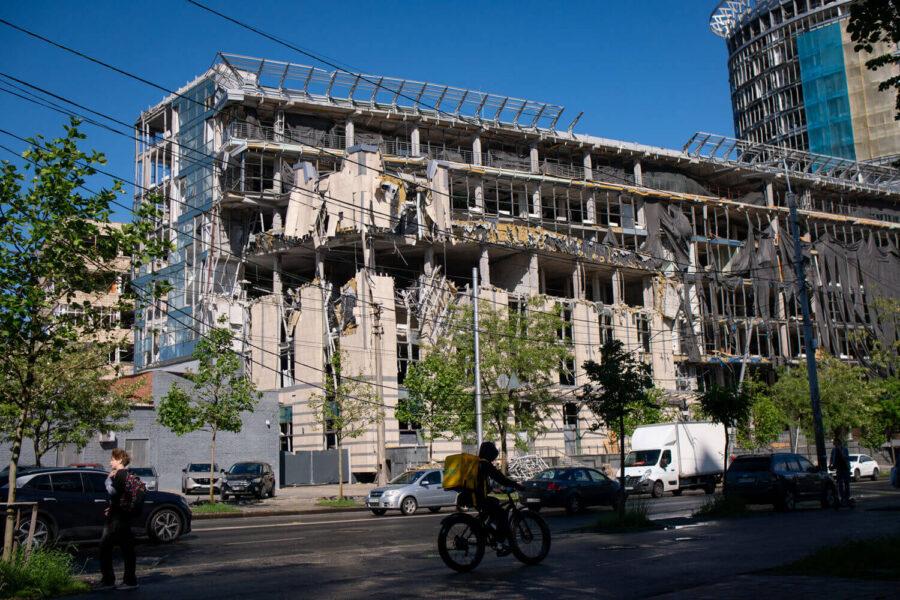
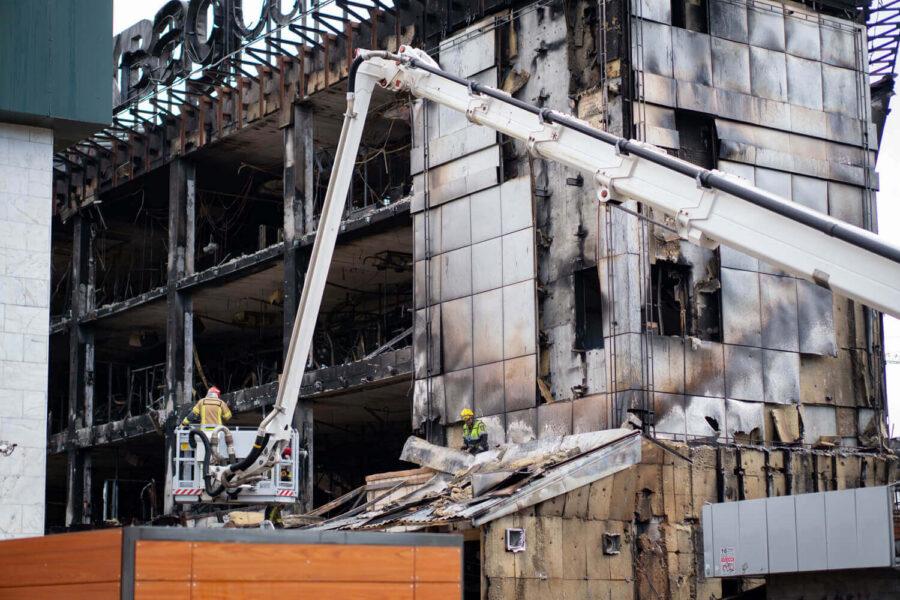
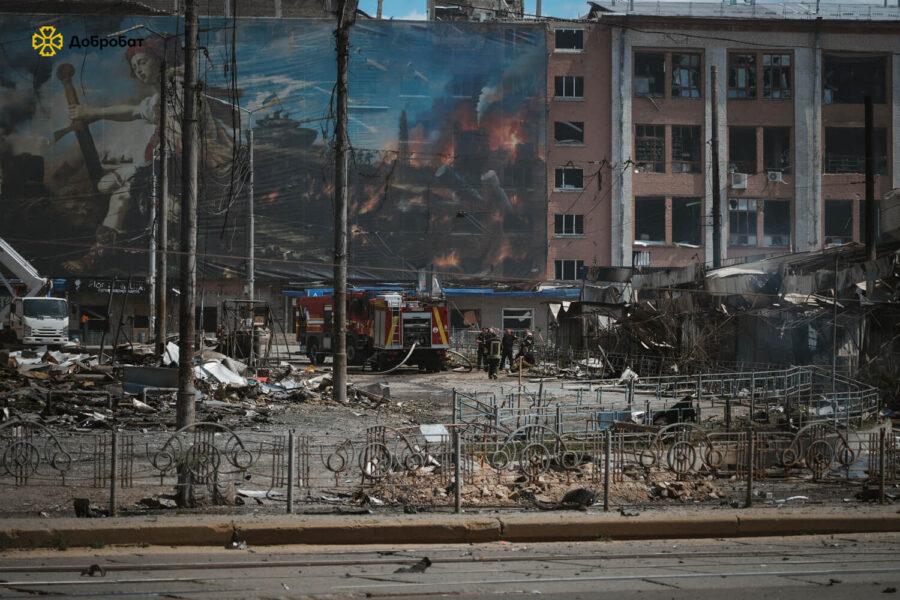
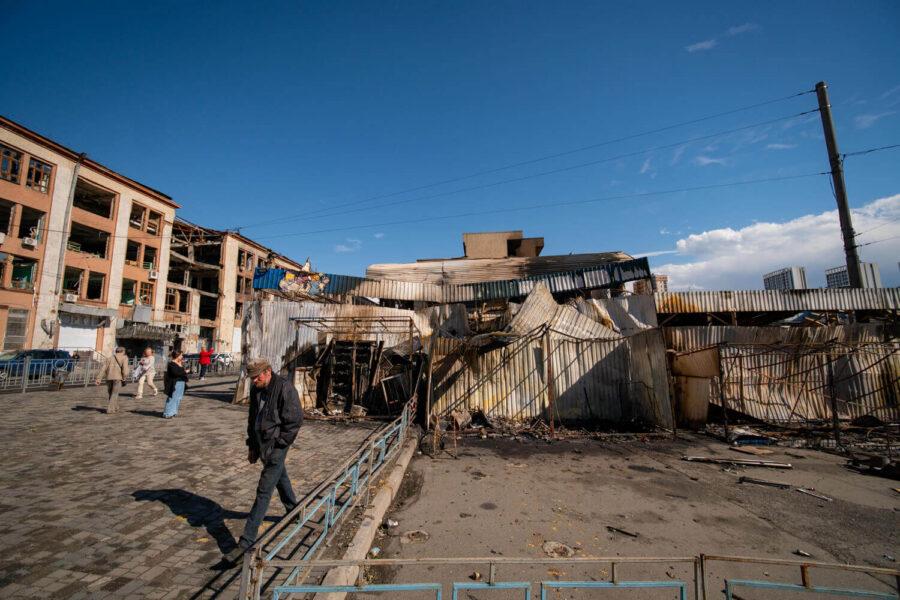
We are filming Lukianivka on May 20, 2026. During the shoot, an air raid alert sounds. I tell the photographer we should take cover — what if something hits again right now? He replies: we have to keep working, there is no time to stop, his family is waiting at home.
It is frightening.
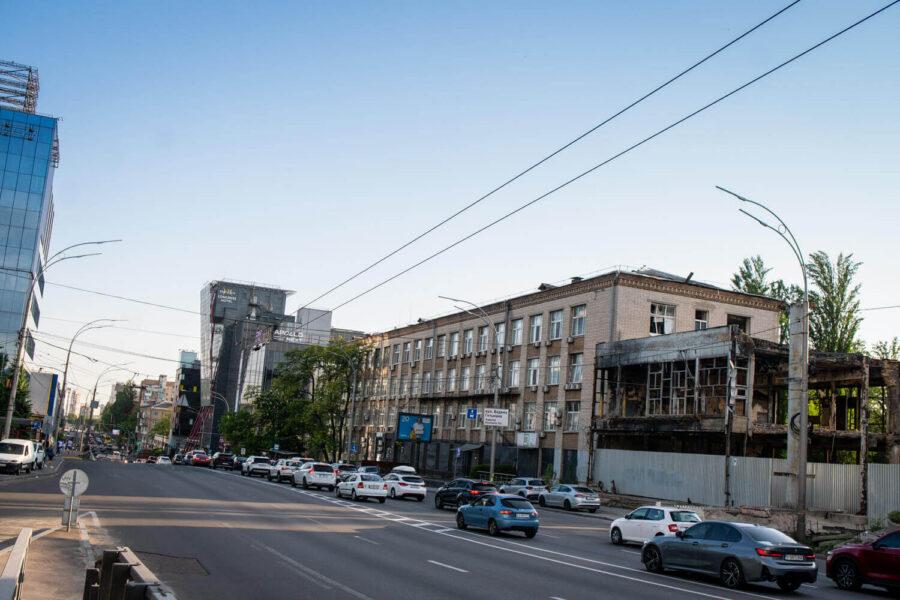
The stained-glass windows of the metro station are covered with plywood. In Kyiv, the metro has long become not only a means of transport, but also a shelter during attacks. Above the “Kvadrat” shopping mall, a partially destroyed clock is still visible. Roman specifically wanted to film it as a symbol: windows were blown out here, fires broke out, an entire district changed — yet the clock remained in place.
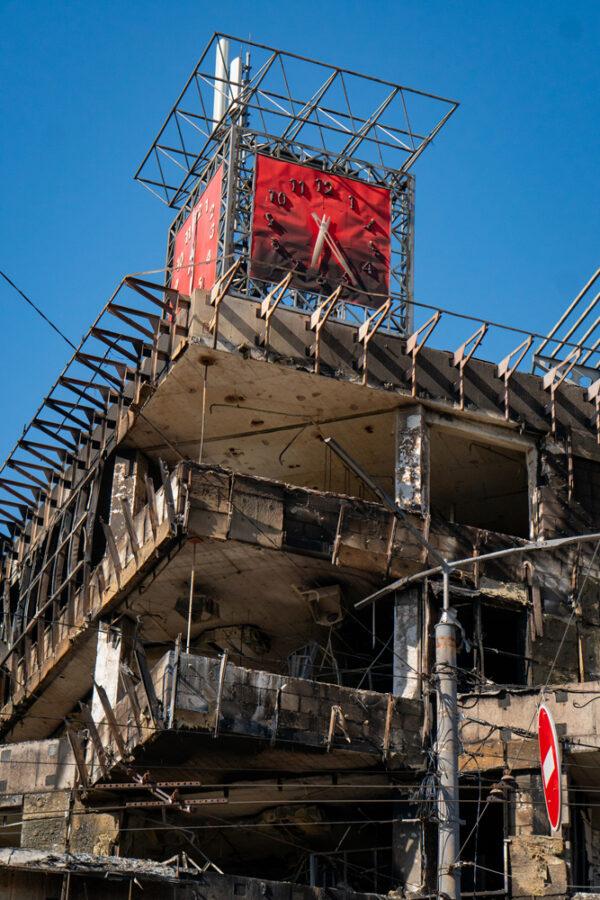
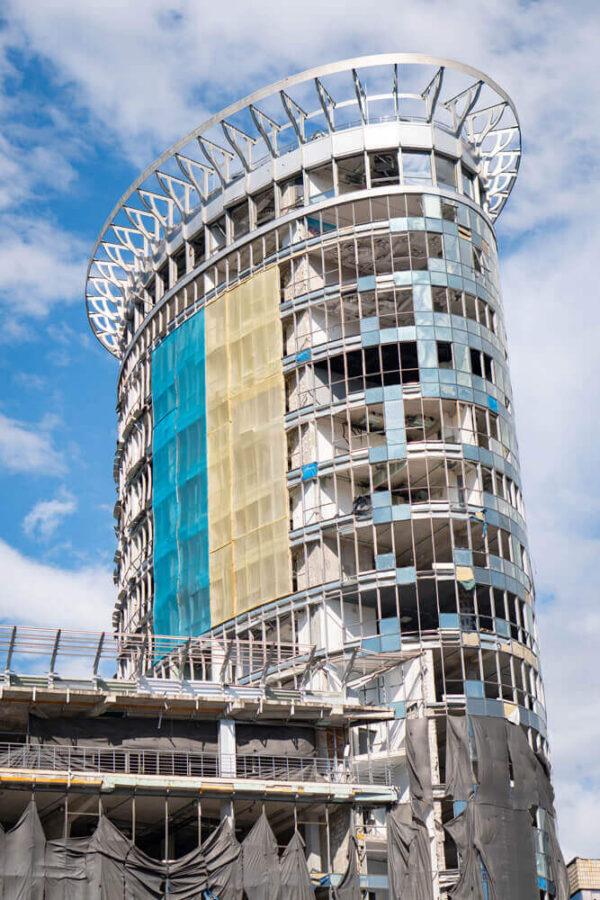
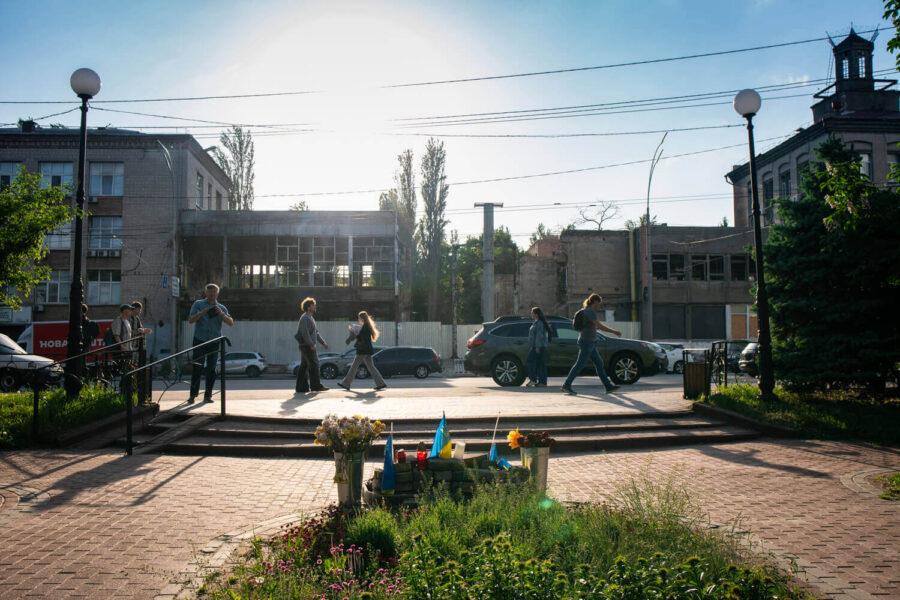
We look into the empty window openings of the “Artem” plant. Behind them, fragments of its former engineering life are still visible — in places, curtains, desks and lamps, shelves with mysterious boxes.
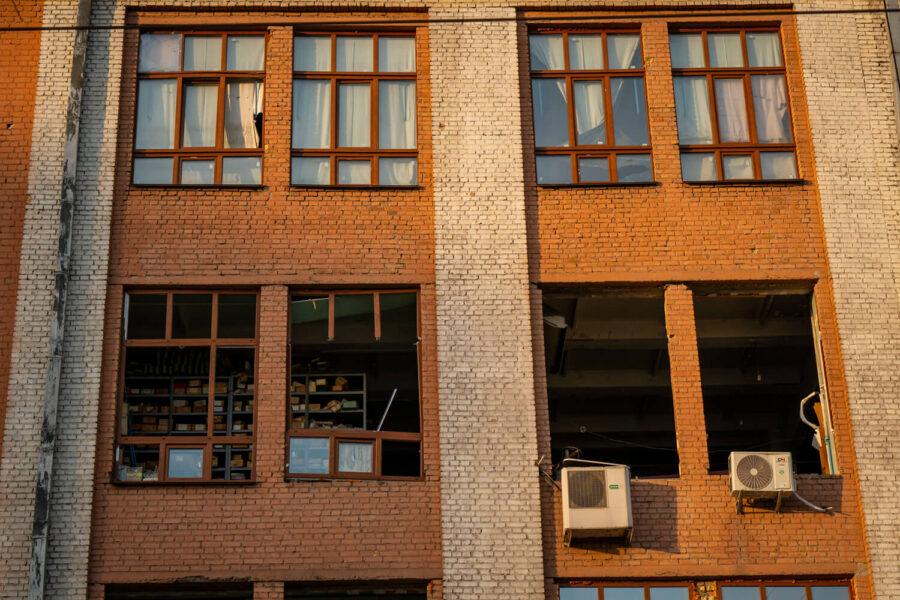
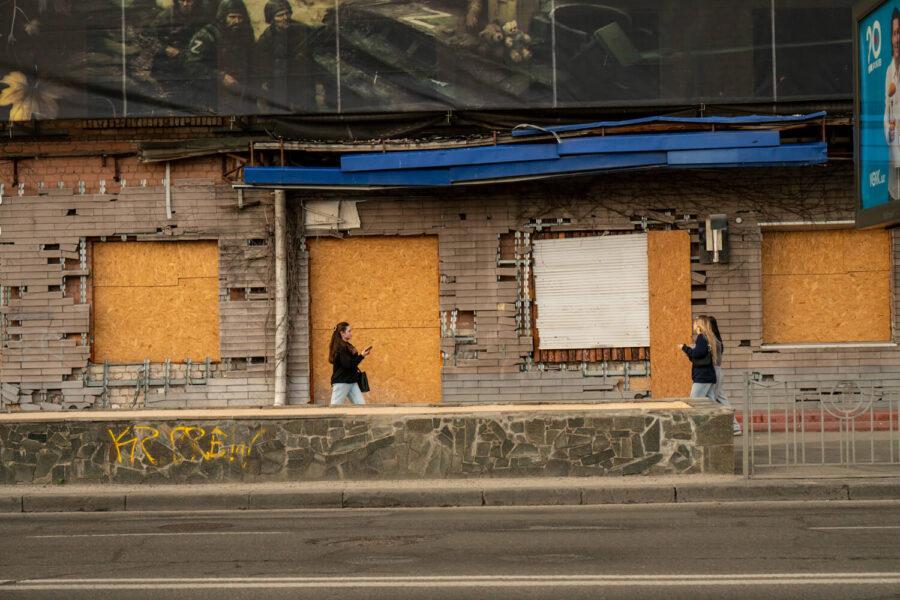
That time, there were no strikes nearby. But four days later, Lukianivka was under attack again. The metro vestibule was damaged so severely that people sheltering underground were put at risk due to smoke. The market was destroyed. “Artem” and the “Louvre” lost even more windows. “Kvadrat” burned down. And yet, the clock still survived.
But in this story, not everyone was lucky.
Lost her mother and son to the war — and nearly lost her home
Theater director Natalia was born and has lived her entire life in her family apartment in Kyiv’s Shevchenkivskyi district, in the city center. After the start of the full-scale war, she lost her job, her mother, and her son. On the night of May 24, Natalia nearly lost her home as well.
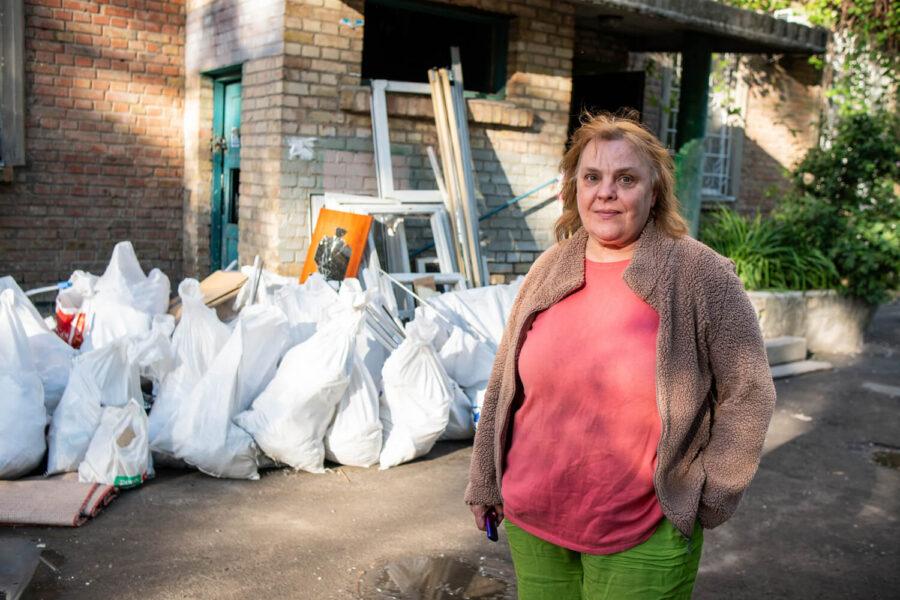
“My mother had cancer. At the beginning of the full-scale war, when Kyiv was almost encircled, and for some time after that, we lost the ability to continue her treatment. My son had a disability due to autism and related conditions. His heart quite literally could not withstand all the grief that the war brought to many people.
He saw everything on television and dreamed of joining the Armed Forces of Ukraine to protect everyone. I explained to him that, given his health condition, he could not do it.
So when a missile recently hit our apartment building, I wasn’t even scared. My husband and I were sitting in the corridor, and I was just watching it fly. I had seen and heard missiles and explosions many times before. But this time it turned out that the missile was flying toward us.
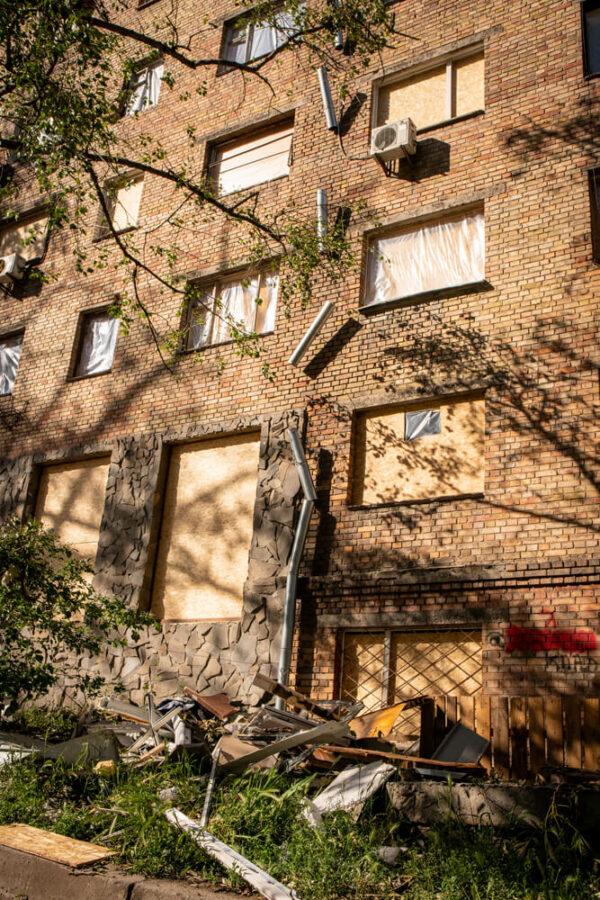
We were lucky it struck the roof of the neighboring entrance. A significant part of the blast wave went upward, into the air. But the fifth entrance is now uninhabitable, and it is still unknown whether it can be restored at all,” Natalia says.
Cultural wounds
As of early 2026, around 150 cultural heritage sites in Kyiv had been damaged as a result of Russian shelling. Among them is the Yakiv Greter House, built in 1882. It was one of the last surviving historical buildings of old Shuliavka.
It survived 143 years and World War II, but was destroyed by Moscow.
During the latest massive attack on Kyiv, about nine more cultural sites were damaged. These include the Chernobyl Museum, the Main Post Office, the National Art Museum of Ukraine, the “Naukova Dumka” bookstore, the International Center of Culture and Arts, the “Ukraine” and “Dnipro” hotels, the Yaroslav Mudryi Library, and the Ukrainian House.
“We are healing these wounds”
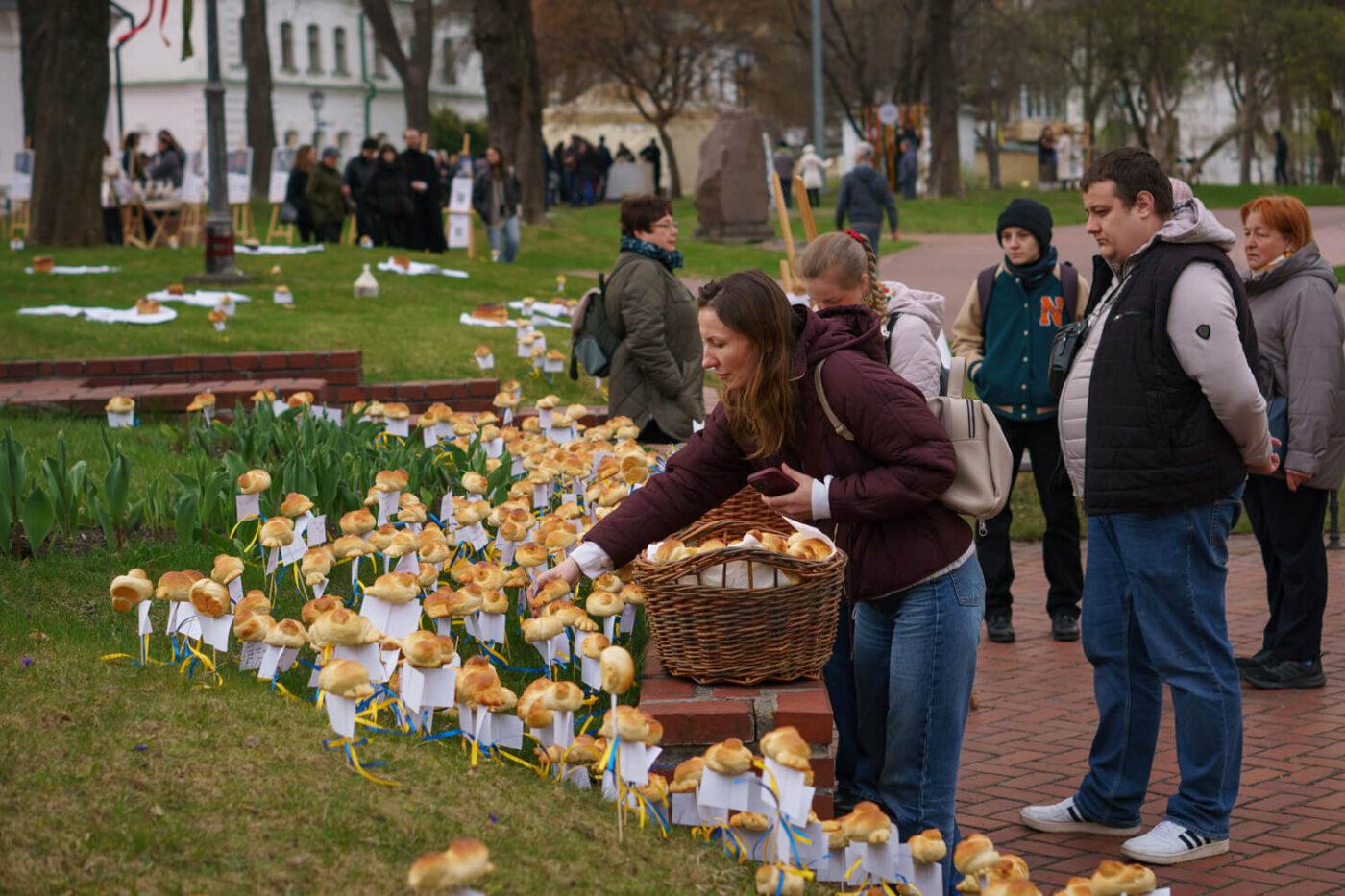
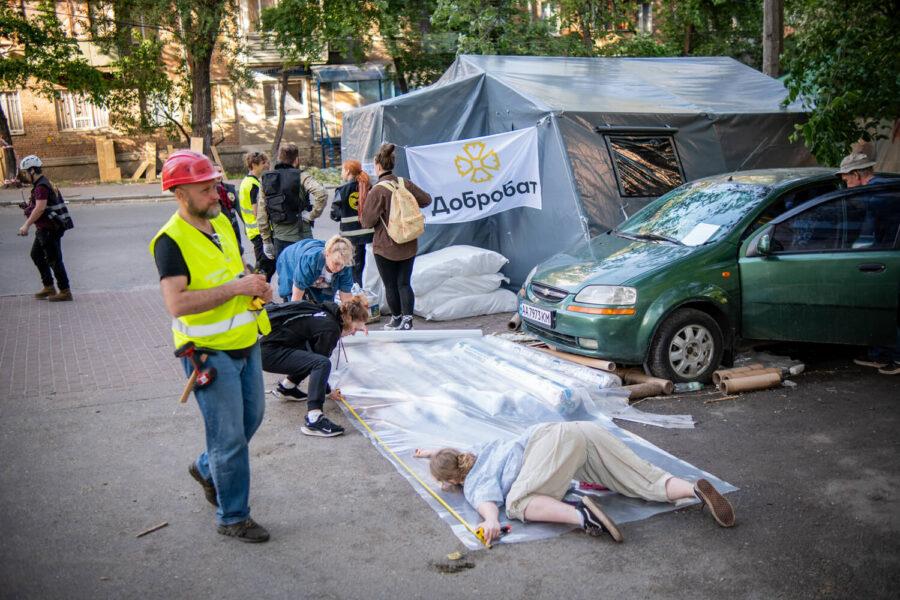
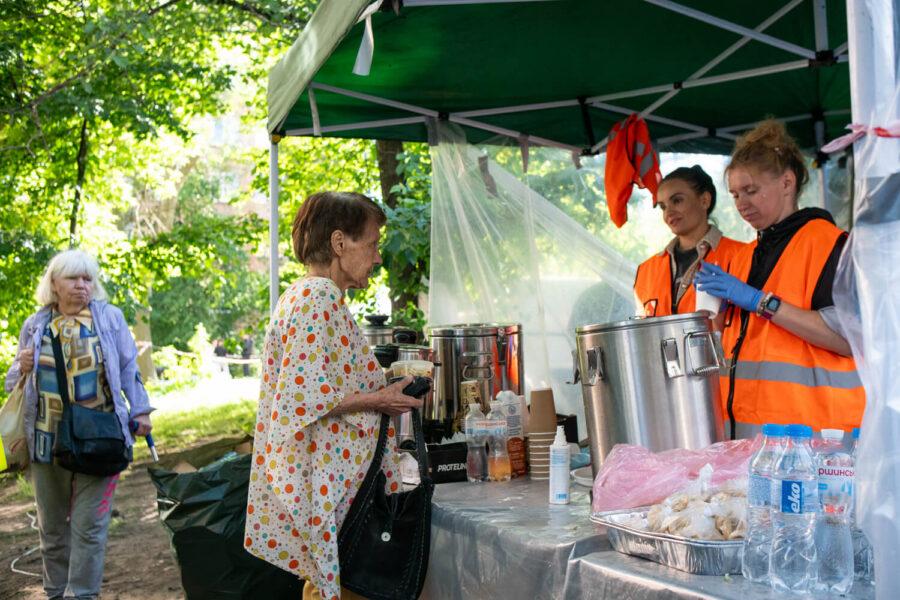
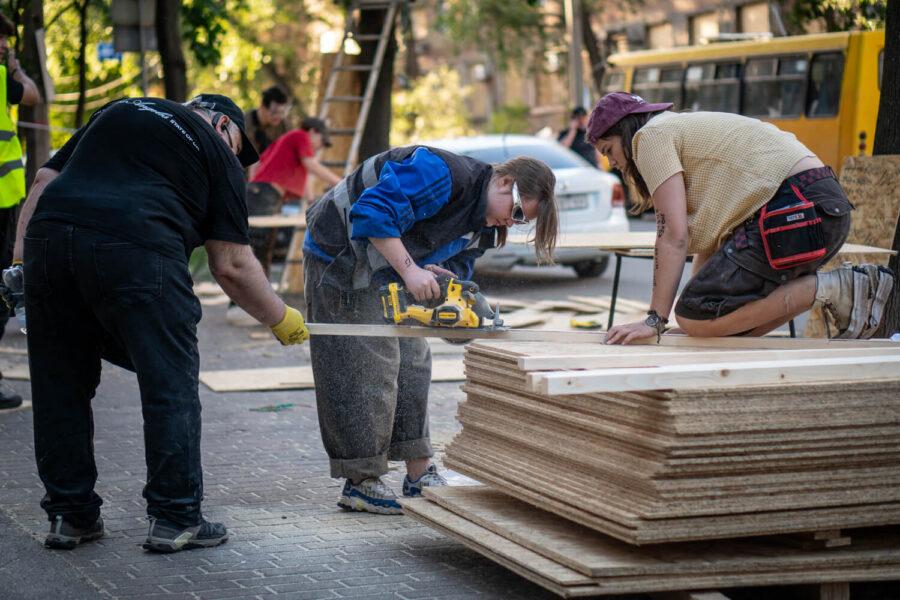
Life goes on, and the city’s wounds are gradually being covered — with plywood, film, temporary structures, volunteer efforts, and the determination of residents to stay in their homes.
Natalia is relieved that her building survived, and that the entrance where she lives has not yet been declared uninhabitable. There is a chance it will remain standing after reinforcement of the load-bearing structures, which residents have been promised will be carried out as soon as possible.
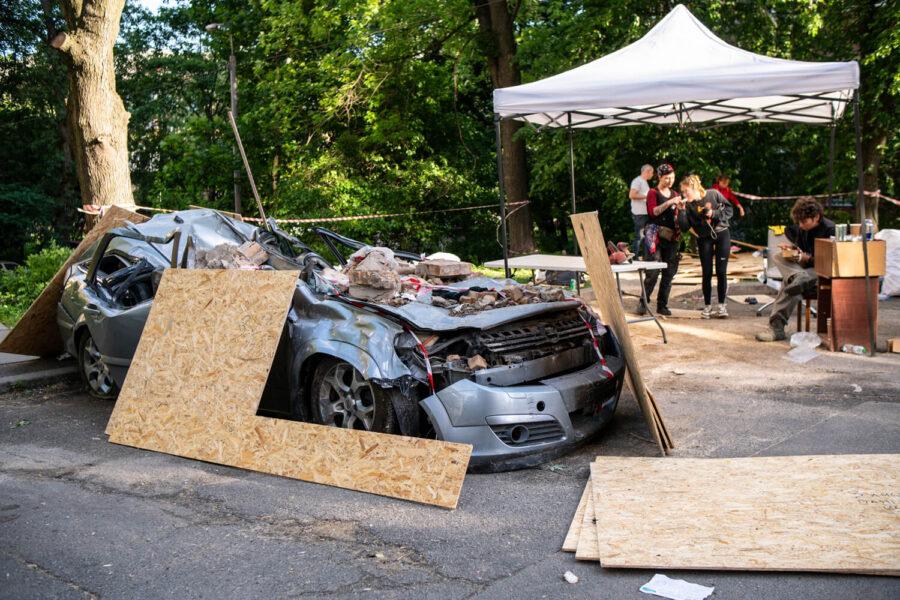
However, there is still no electricity, gas, water, or sewage in the building. Residents are grateful to volunteers: they have set up a field kitchen nearby, installed portable toilets in the courtyard, and are helping to cover broken windows with OSB boards and plastic film.
That night, around 50 locations across Kyiv were damaged in total. These include hundreds of residential buildings, infrastructure sites, and public spaces. Volunteer Kateryna Terekhova, who helped organize basic support for those affected in Lukianivka, says that in the Shevchenkivskyi district alone, about 80 buildings were damaged.
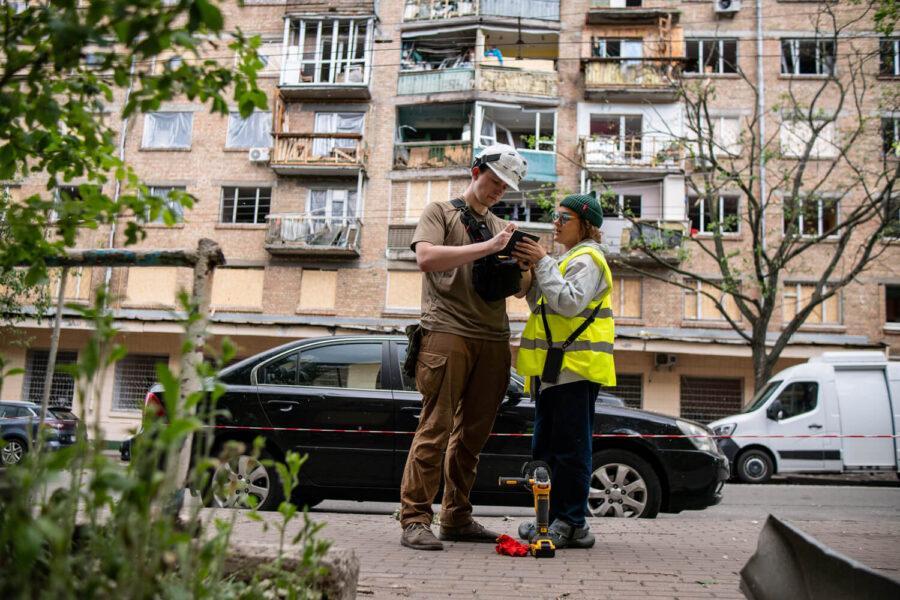
The destruction of the “Kvadrat” shopping mall and the Lukianivskyi Market became one of the most visible symbols of this attack. But behind the façades and rows of shops are hundreds of apartments where people lost windows, doors, belongings, their sense of safety, and everyday normality.
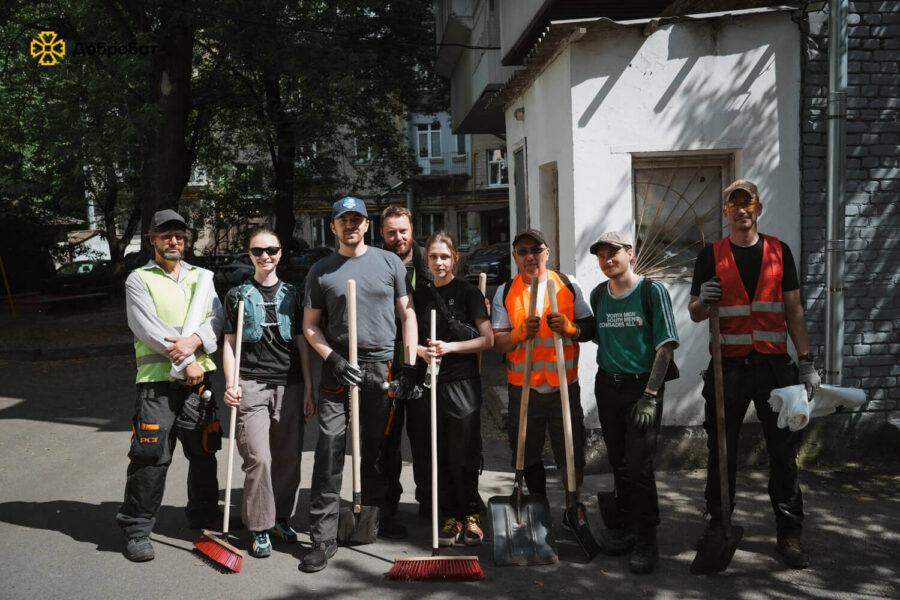
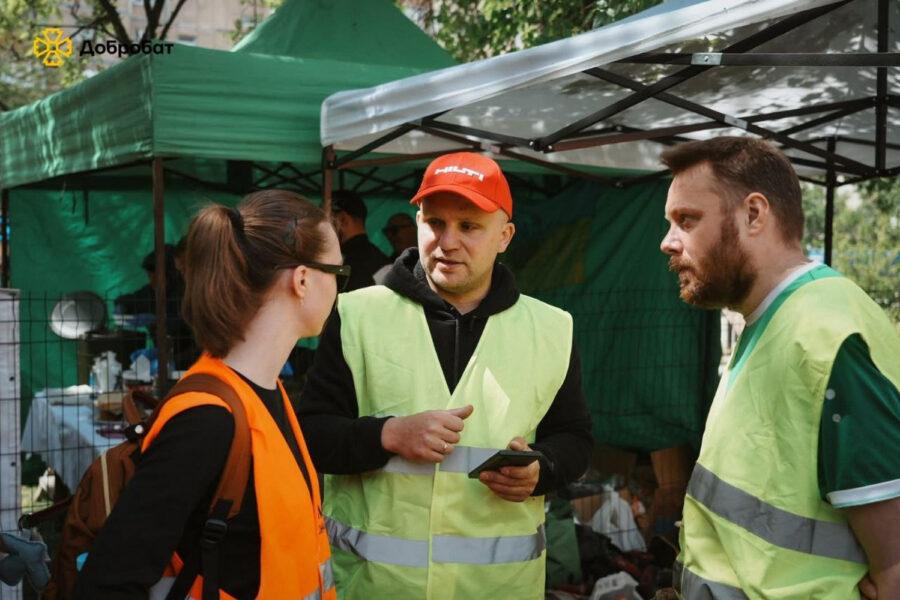
Vasyl Lymanynets, coordinator of the Kyiv branch of the volunteer construction battalion “Dobrobat,” says that after the May 24 shelling, their volunteers worked for almost a week — from eight in the morning until late evening.
“Unfortunately, we have to choose the sites where our help is needed the most. Despite a large number of volunteers — we currently have 1,700 people in Kyiv — it is still not enough to work at all sites simultaneously. As of May 25, we had completed over 200 requests. That is more than 200 apartments: windows, cleaning, OSB boarding, and plastic sheeting,” Vasyl explains.
“Dobrobat” brings together people of different ages and professions — from IT specialists to professional builders. But after such attacks, what is needed most are those with construction skills who can quickly secure broken windows and doors.
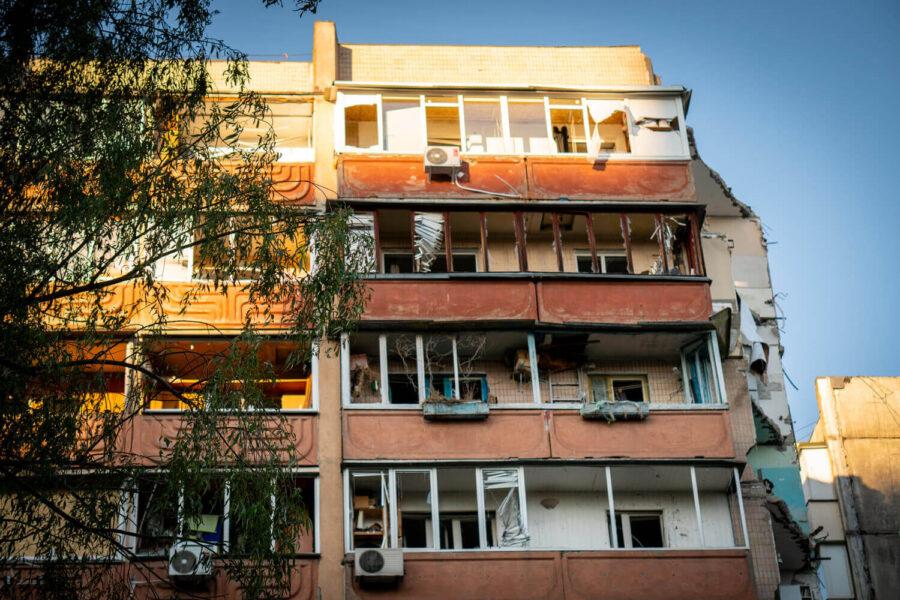
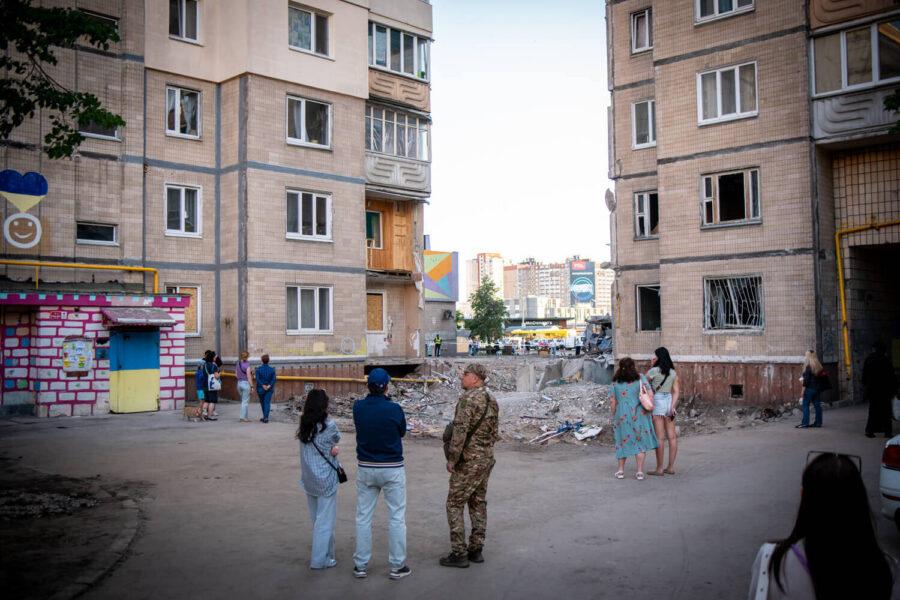
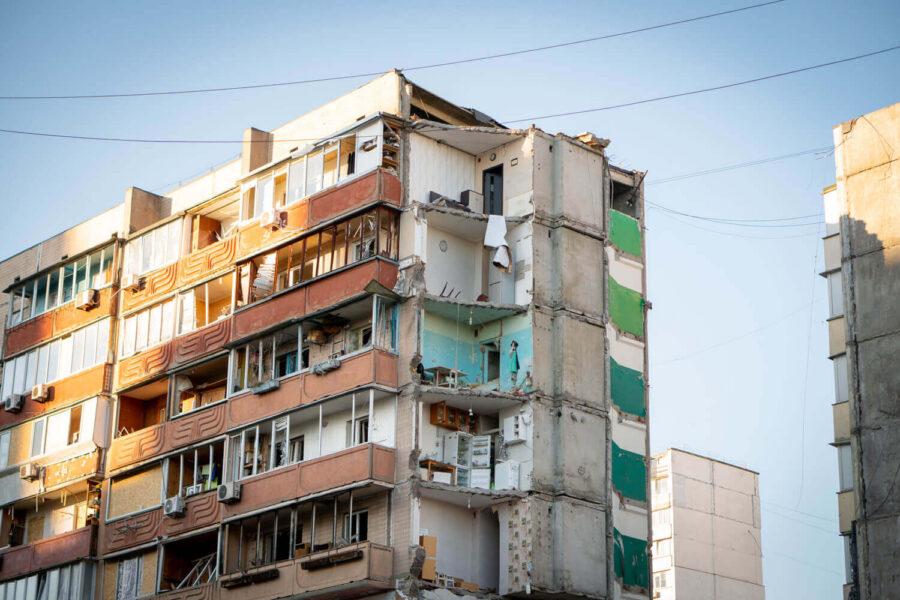
Not all wounds can be healed: tragedy in the Kharkivskyi residential area
Natalia’s building now has no electricity, water, gas, or sewage. But as one of her neighbors said, the residents were still lucky: no one was killed.
Construction specialists explain this by the building’s structure: it is made of brick and has a strong foundation. Not all buildings in Kyiv withstand strikes in the same way.
Ten days earlier, another tragedy occurred in a different district of Kyiv. During a separate attack, a Kh-101 cruise missile struck a nine-story panel apartment building. The entrance hit by the explosion collapsed like a house of cards. Twenty-four people were killed under the rubble.
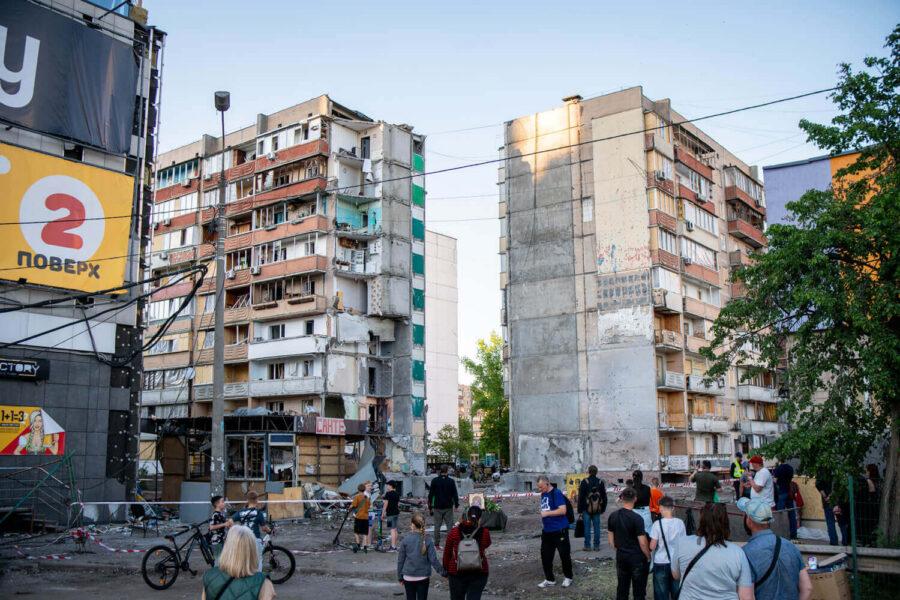
An impromptu memorial appeared near the building. Kyiv residents bring flowers and children’s toys there. Photographer Roman stops by it with tears in his eyes: among the victims was a girl who attended the same school as his daughter. That day, two more children were killed.
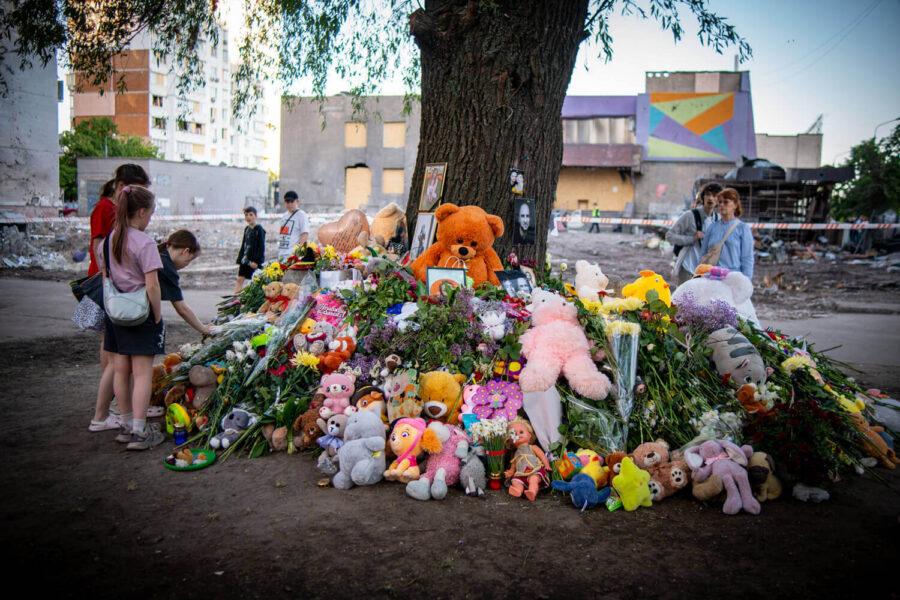
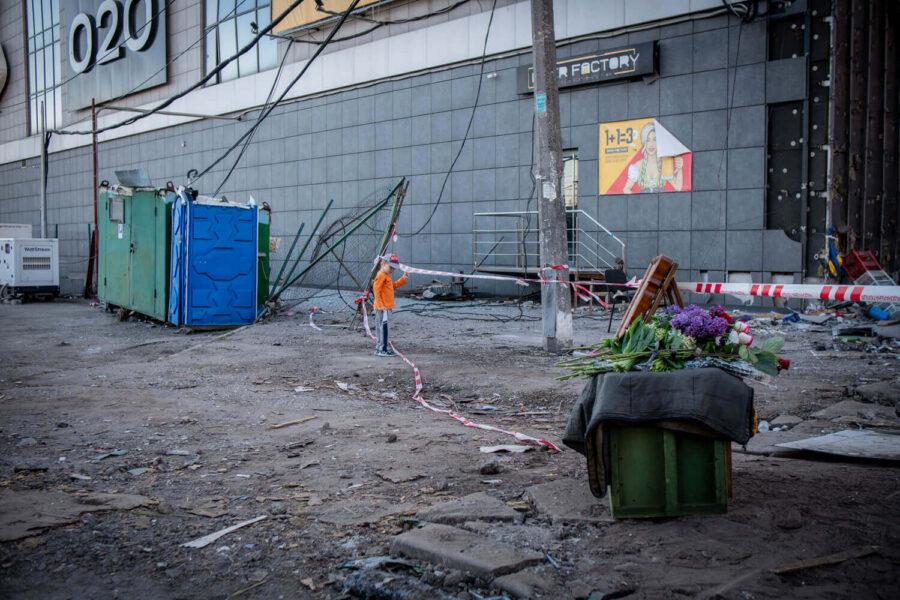
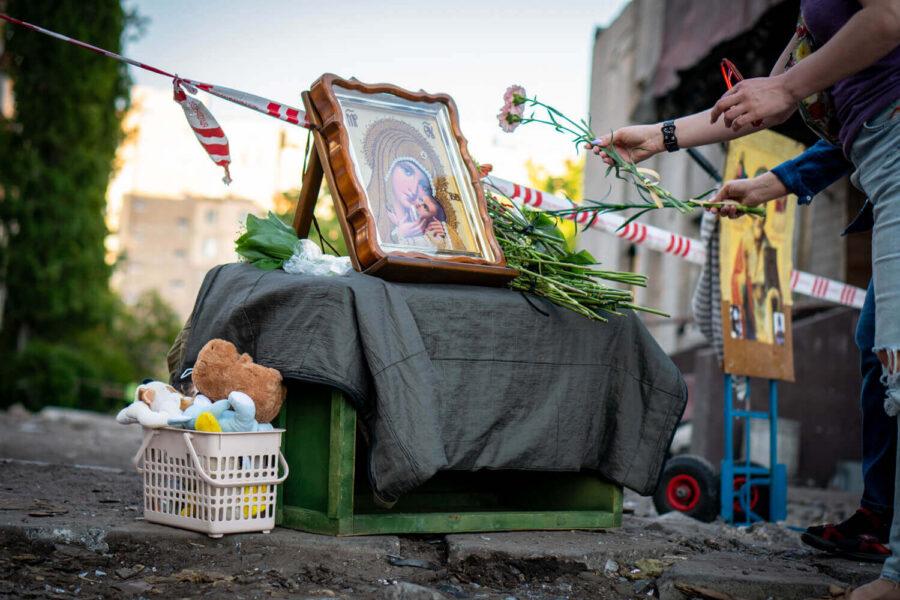
Photo: Roman Chygrynets