
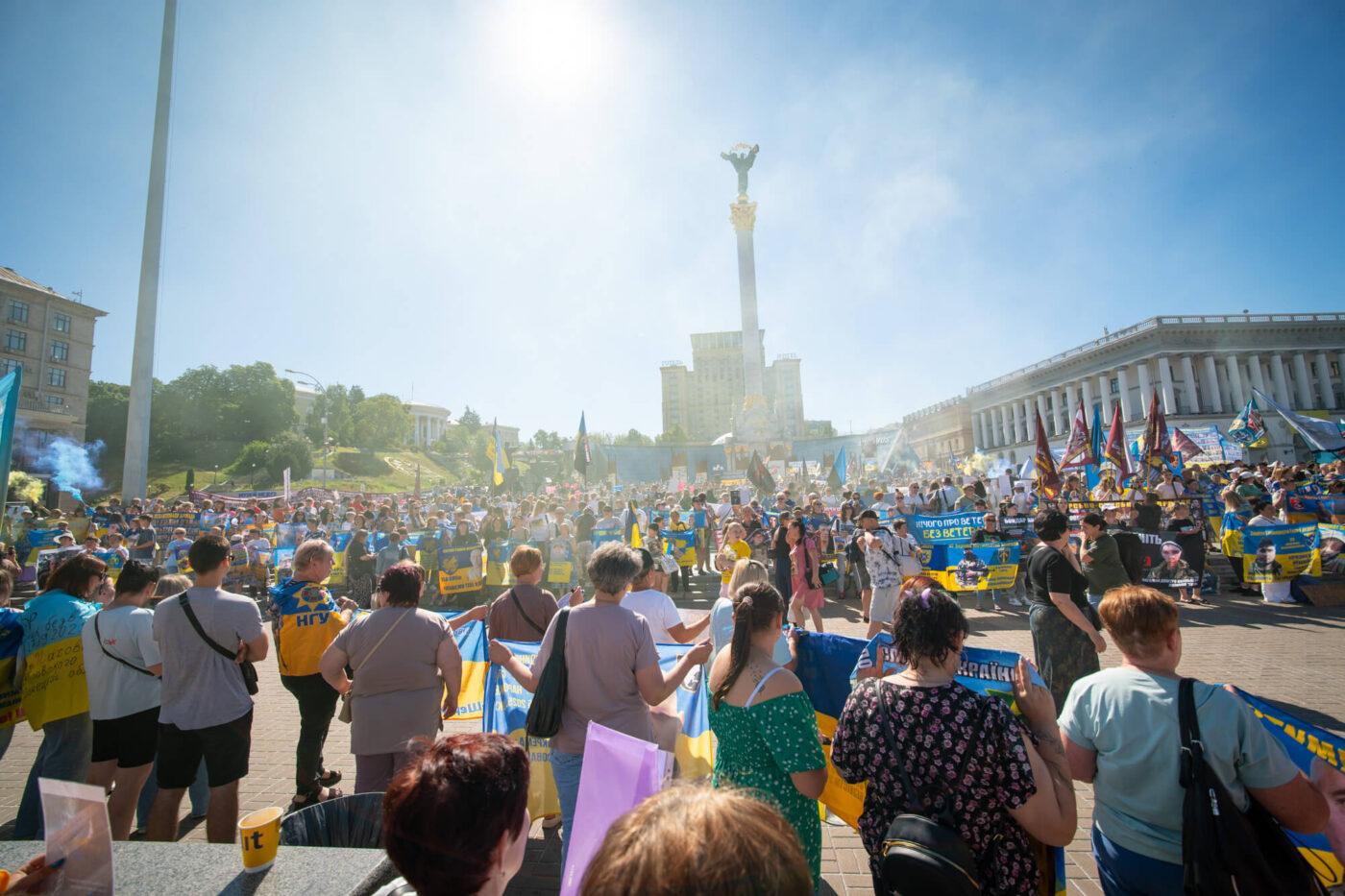
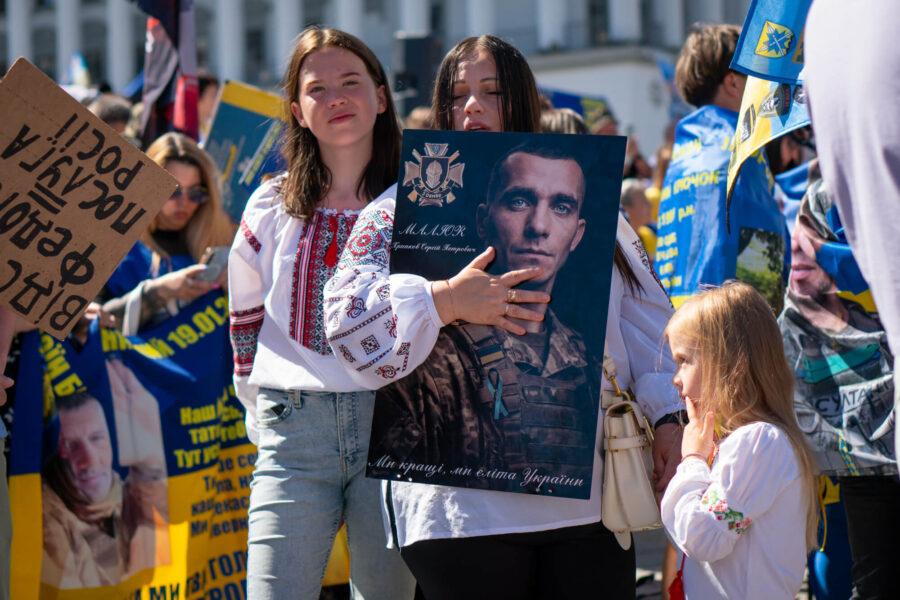
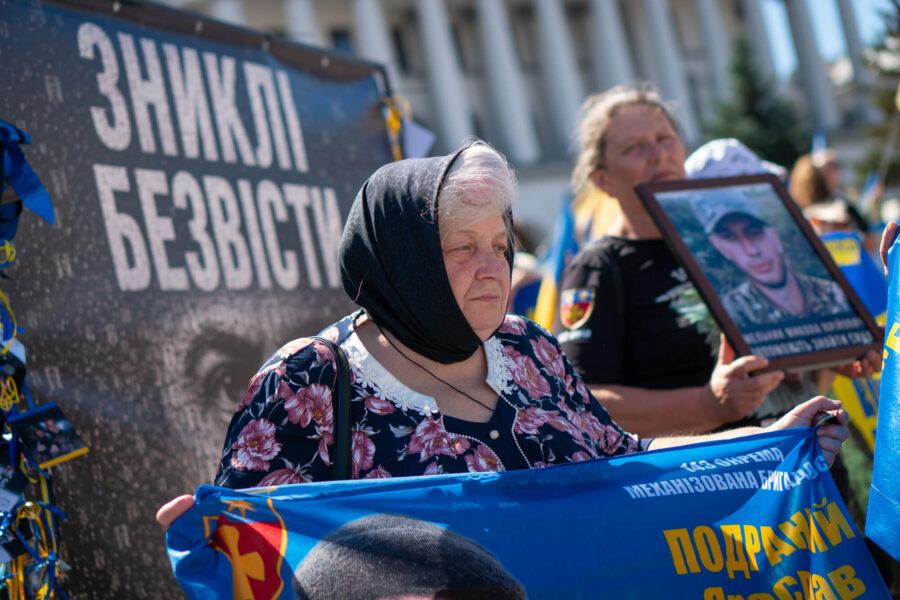
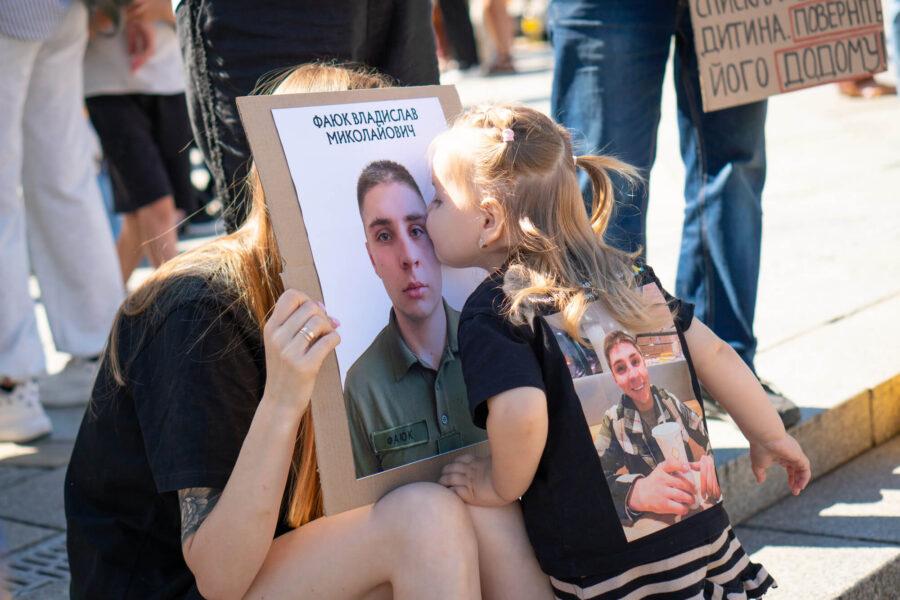
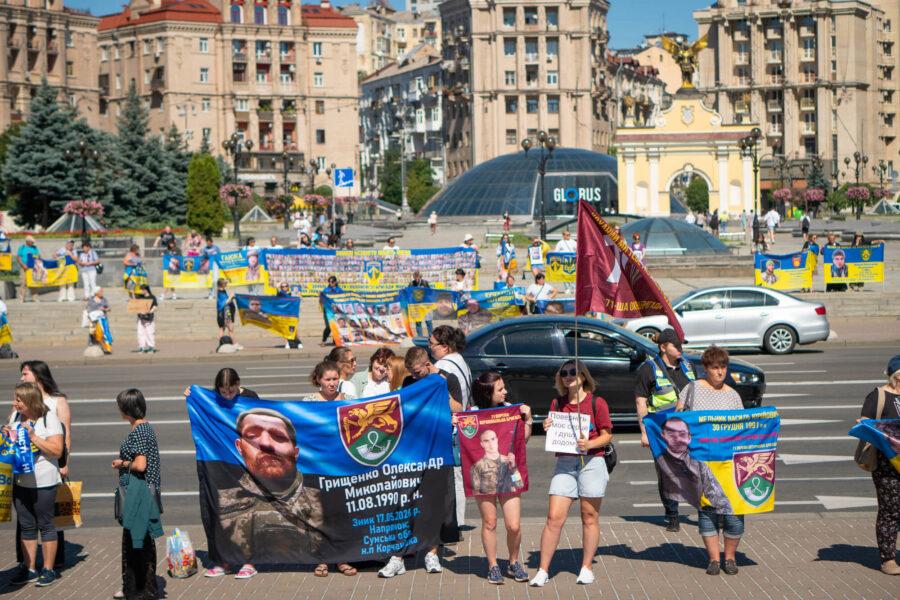
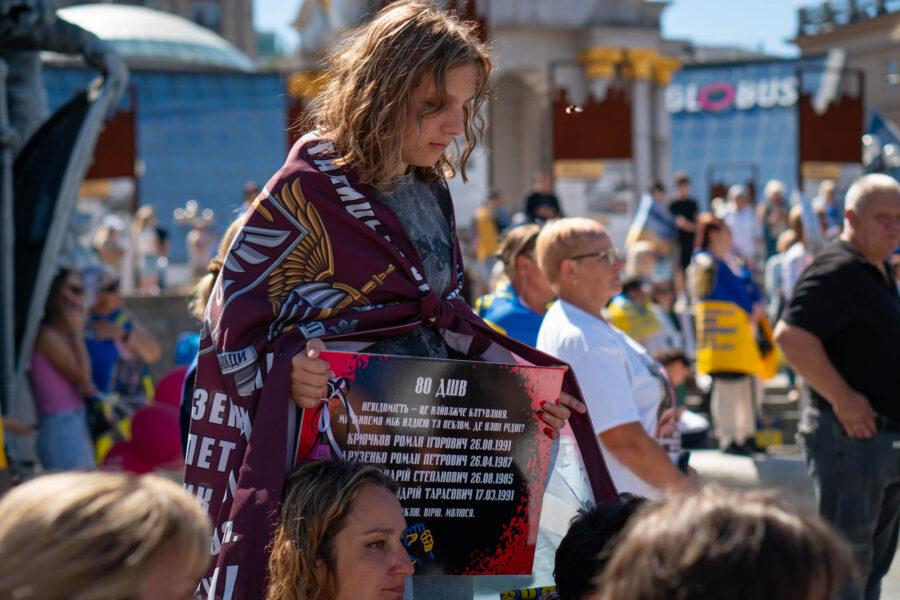
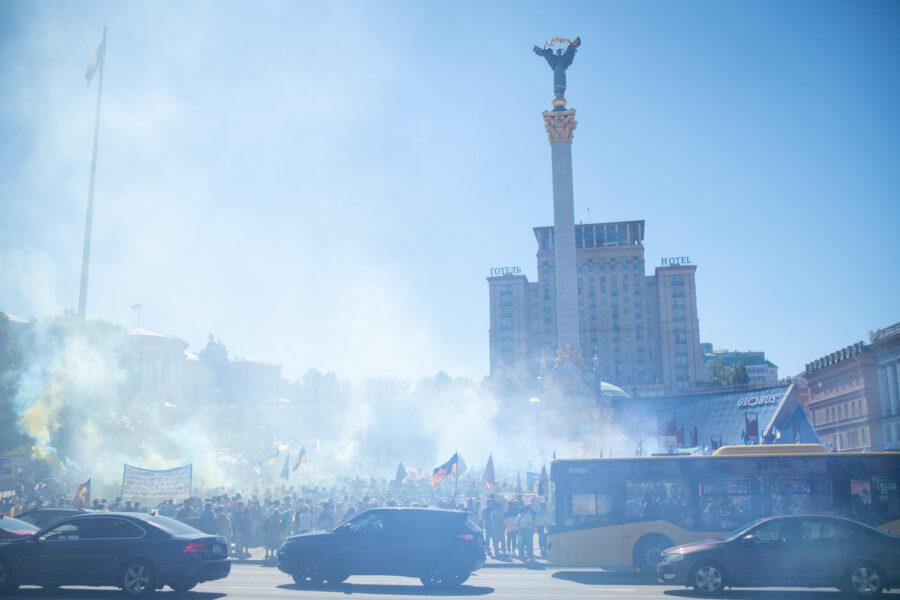
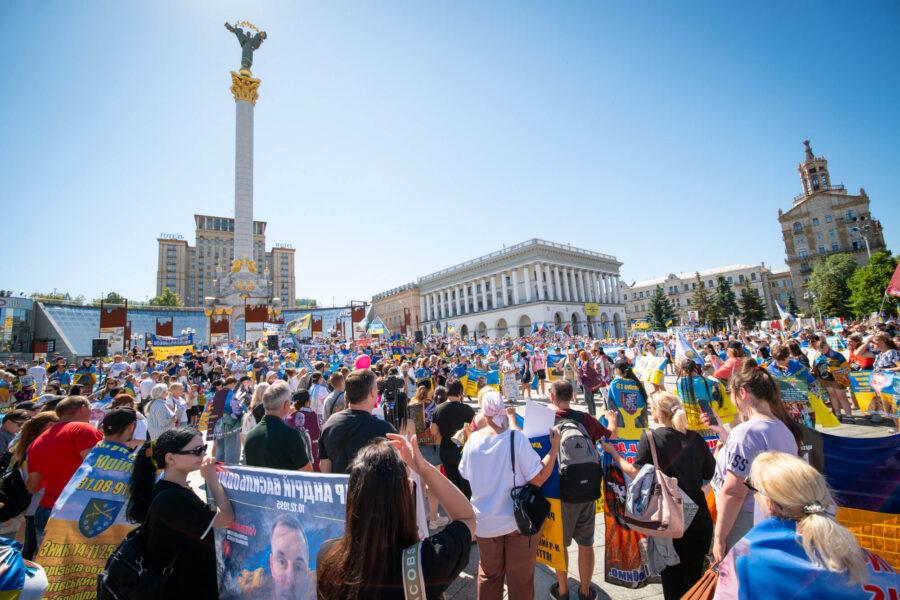
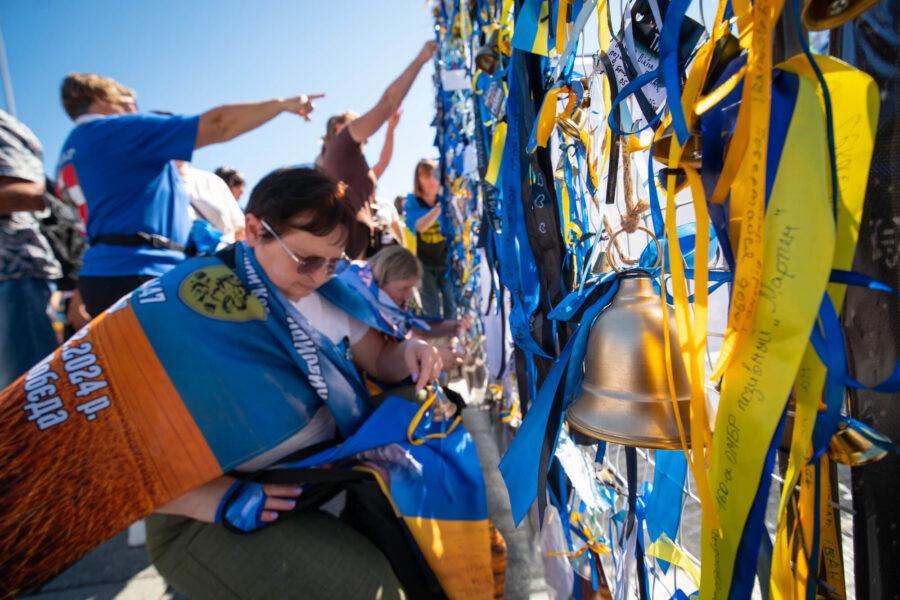
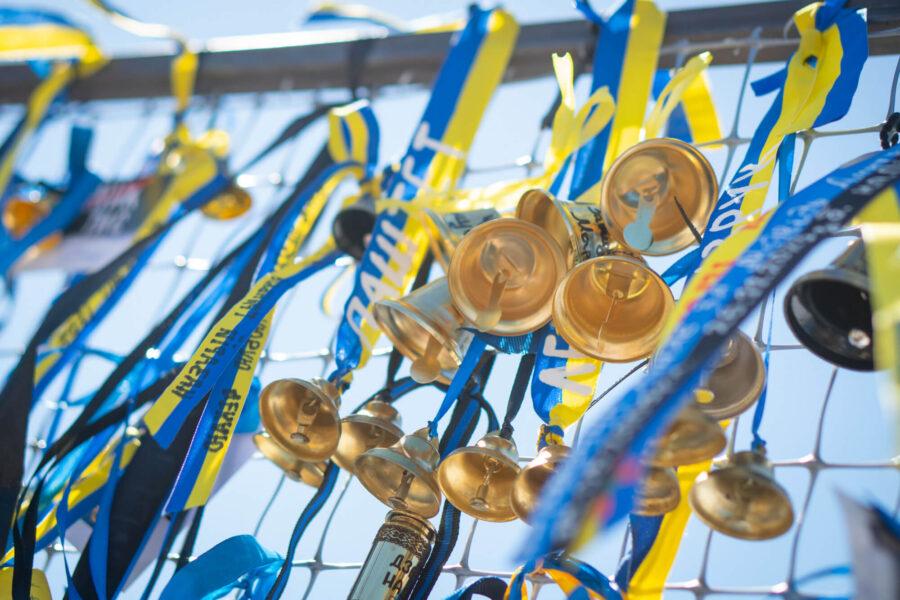
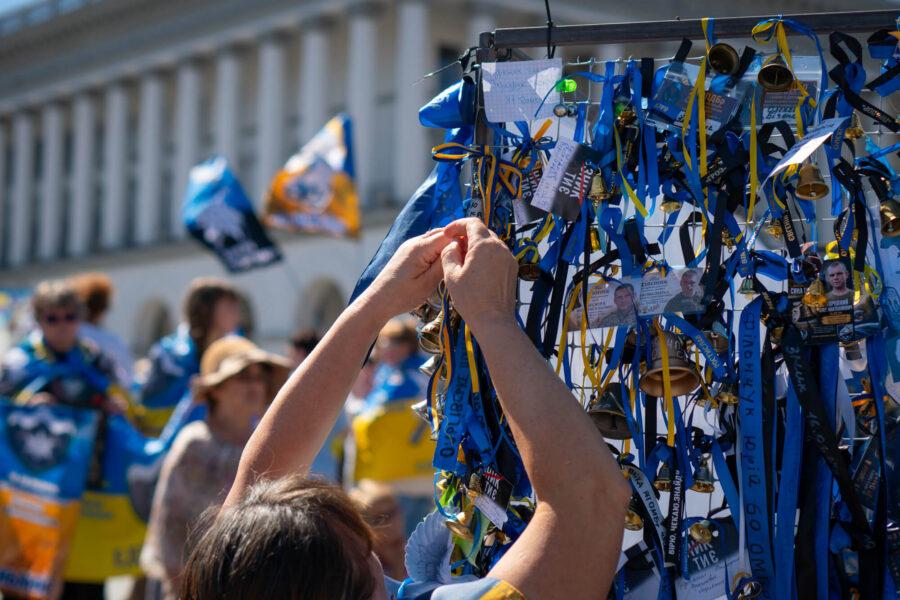
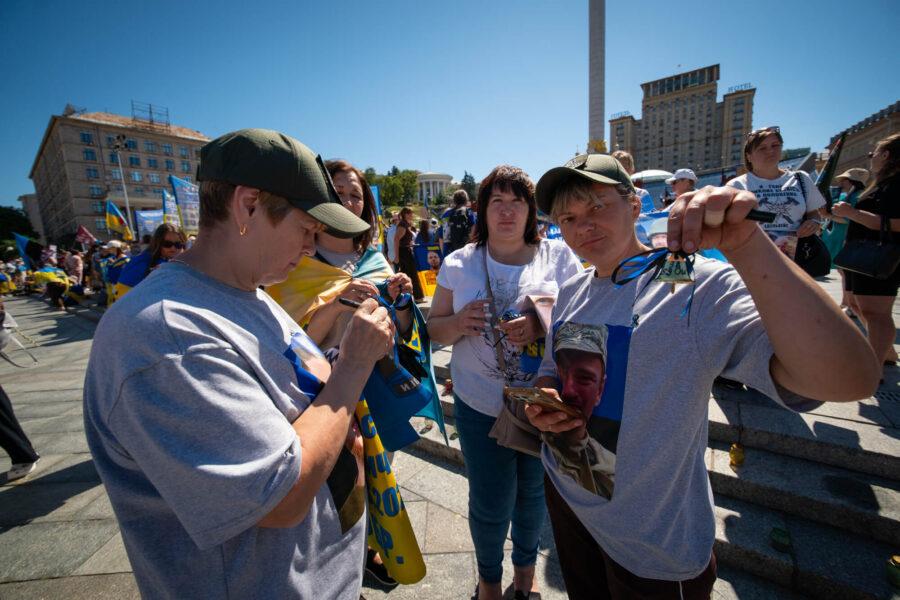
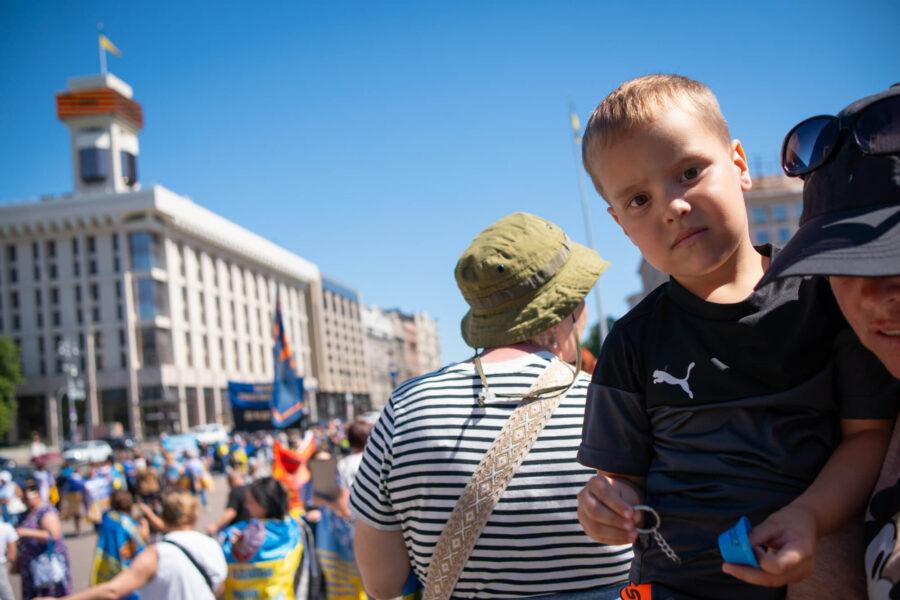
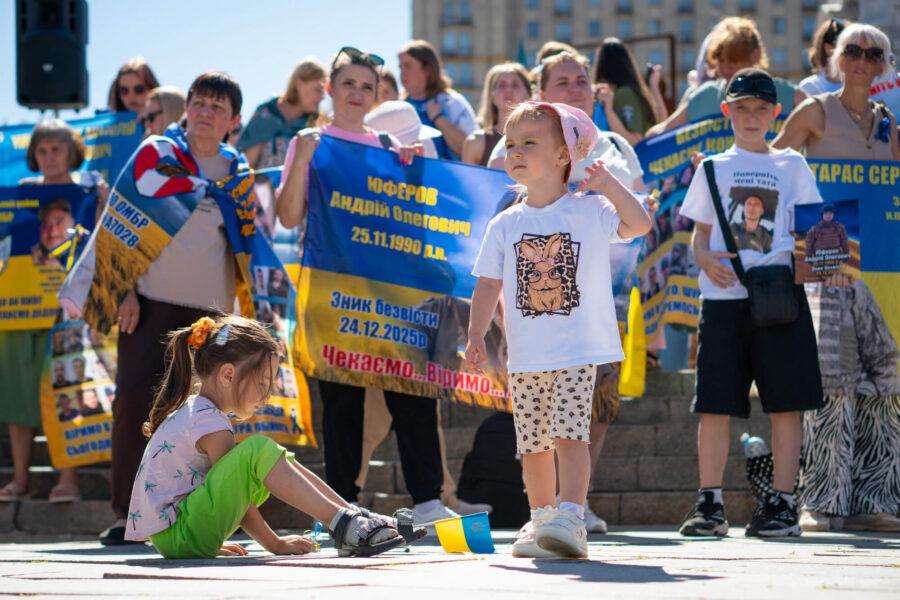
At the “Bells of Hope for Those in Silence” rally on Kyiv’s Independence Square, children and elderly people, mothers and fathers, wives and husbands gathered to honor those they are still waiting to welcome home. In their hands they held small bells decorated with blue-and-black ribbons. Their sound was meant to remind the world of people from whom families have received no news for months—or even years.
“Let us cry out to the whole world and ring the bells so that the missing and the prisoners of war may return home alive,” the participants urged.
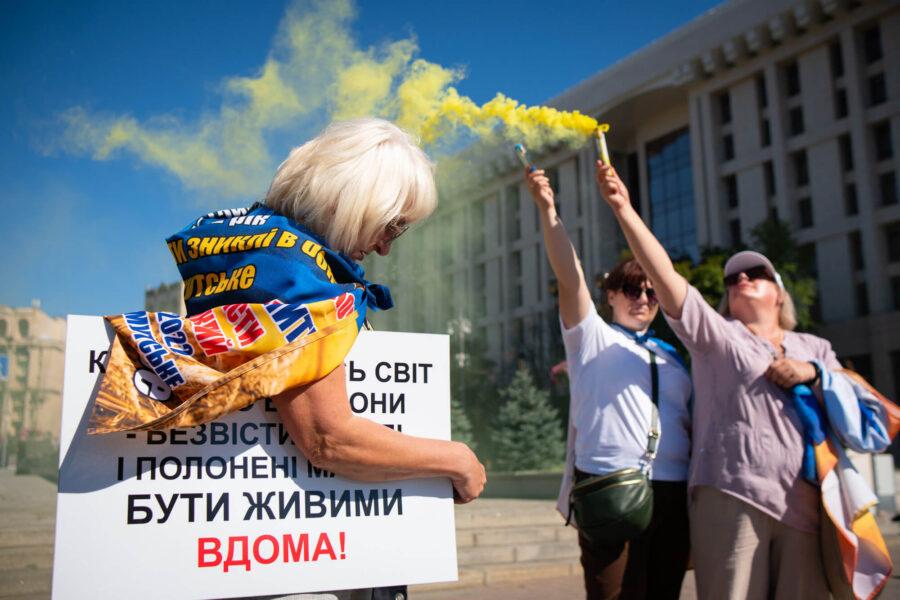
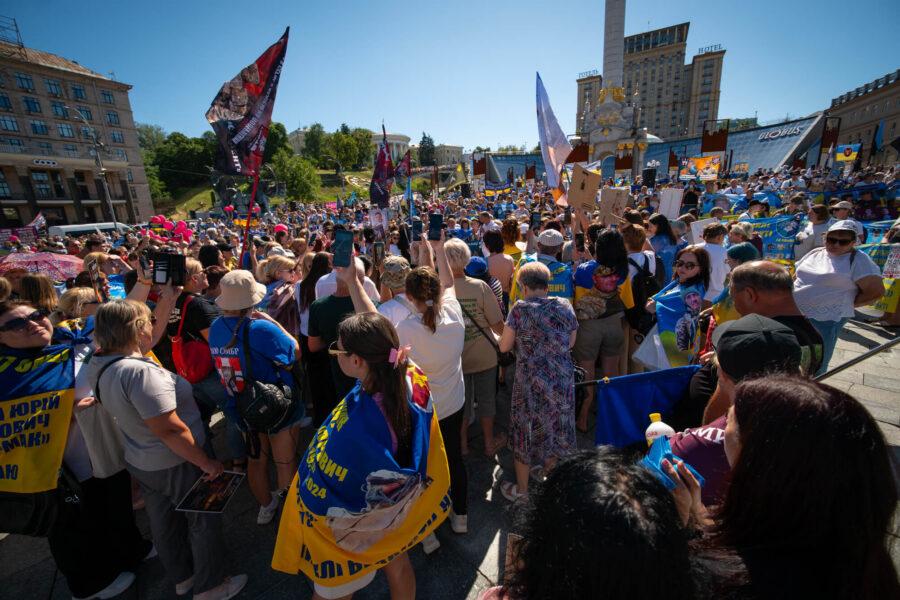
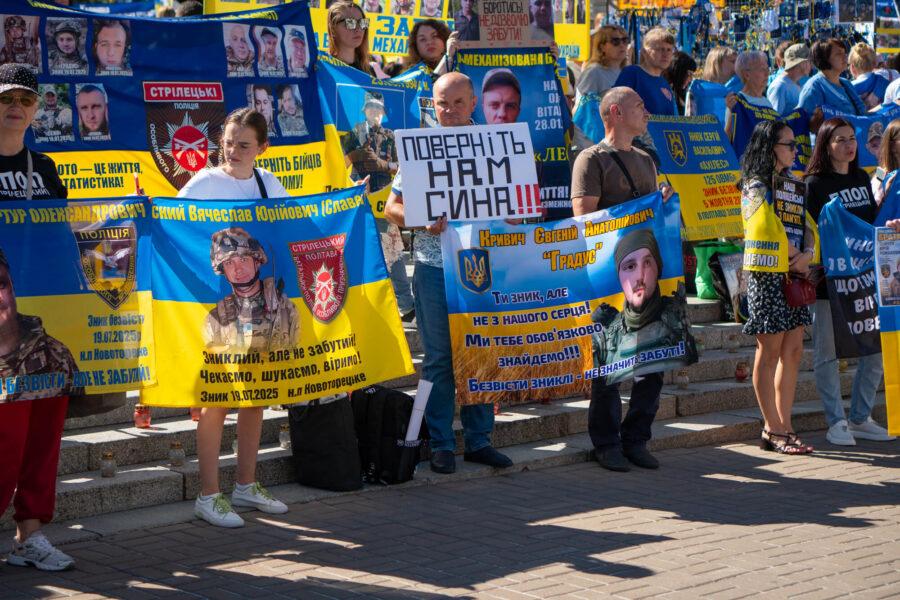
The rally, held in the heart of Kyiv, was dedicated to everyone who has disappeared because of Russia’s war against Ukraine: Ukrainian prisoners of war held in Russia, civilian detainees, political prisoners imprisoned by the Kremlin, and children forcibly deported from Ukraine by Russia.
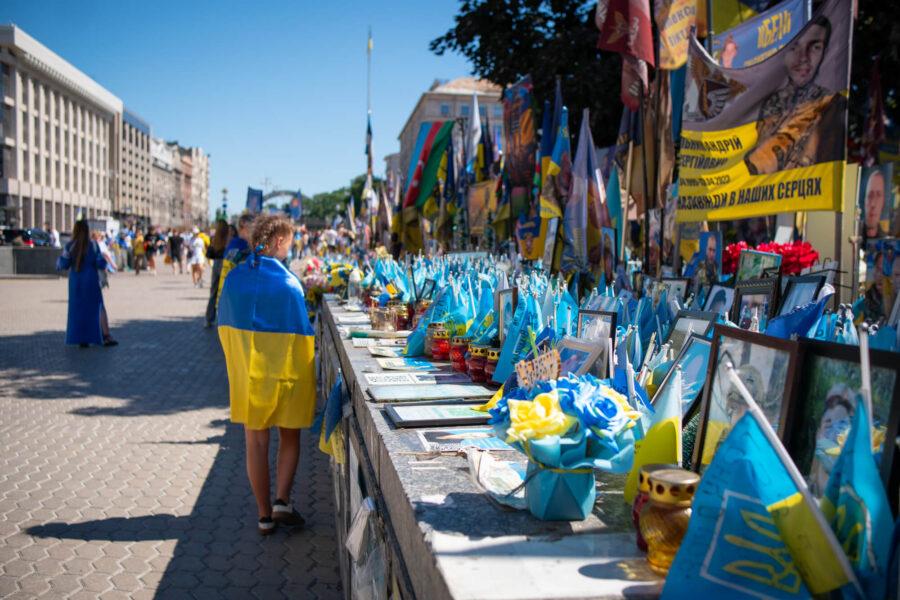
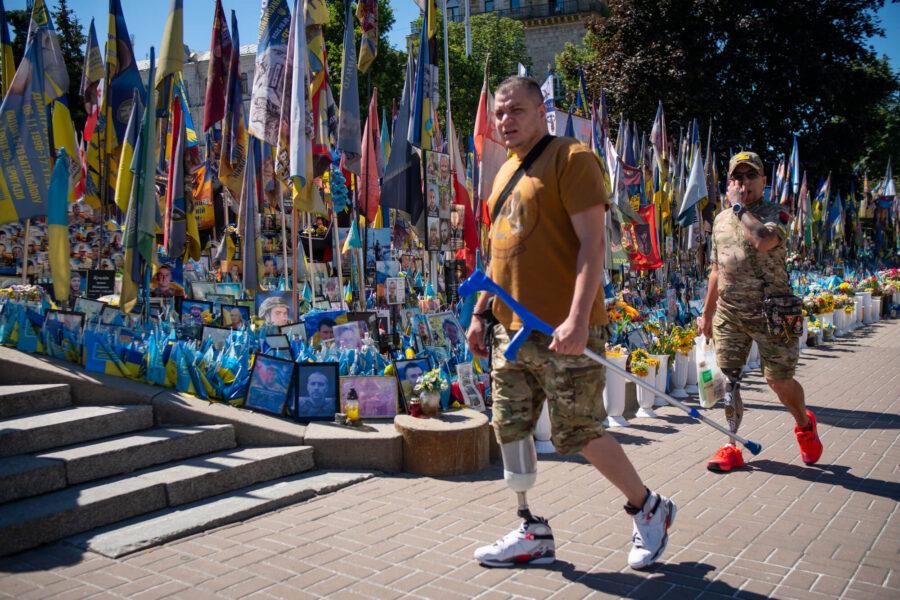
Since 2022, July in Kyiv has become a month of rallies, exhibitions, and other events held to support those still in captivity, honor those who lost their lives, and call on the international community to bring those responsible for torture and killings to justice. These events coincide with the anniversary of the mass killing of Ukrainian prisoners of war at Penal Colony No. 120 near the temporarily occupied town of Olenivka in the Donetsk region.
Olenivka: A Crime That Remains Unresolved
During the night of July 29, 2022, dozens of Ukrainian prisoners of war were killed at the prison colony. Since then, the date has become a day of remembrance for their families and a reminder of a crime whose full circumstances have yet to be established.
Shortly before the explosion, a group of prisoners had been transferred to a separate barrack. According to survivors and the findings of the Ukrainian investigation, the explosive device may have been placed inside the building. After the blast, the wounded were left for hours without adequate medical care. Ukrainian authorities report that 53 Ukrainian defenders were killed that night.
Russia claimed that the barrack had been destroyed by a HIMARS missile. However, a later analysis by the United Nations rejected this explanation, concluding that the pattern of destruction did not match such a strike. At the same time, international experts were unable to determine the exact type of munition used or identify the location from which it had been launched.
A UN fact-finding mission established to investigate the Olenivka tragedy was never granted access to the site. In January 2023, the mission was dissolved because it could not obtain the necessary security guarantees or permission to enter the prison colony. Since then, the families of those killed and those still held captive have continued to demand an independent investigation and accountability for those responsible.
“Bells of Hope for Those in Silence” on Independence Square
The largest demonstration in Kyiv in support of prisoners of war and missing persons in July 2026 was the “Bells of Hope for Those in Silence” rally. Even the vast expanse of Independence Square was not large enough to accommodate everyone who came.
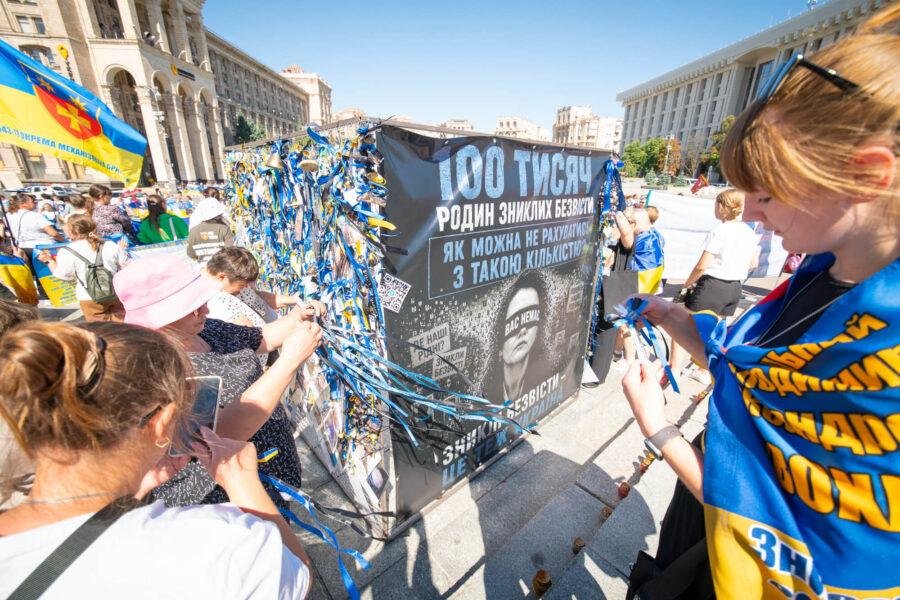
“First, I created the blue-and-black symbol of the missing. It represents people suspended between heaven and earth. It symbolizes our hope that they are still alive,” says the event’s organizer, Tetiana Bandrivska.
Her husband, Captain Serhii Bandrivskyi, was a career military officer. He had been medically discharged after suffering a serious injury during the war in eastern Ukraine, but after Russia’s full-scale invasion on February 24, 2022, he returned to the Armed Forces of Ukraine.
On August 14, 2024, he went missing during the fighting for Toretsk in the Donetsk region.
Tetiana then left her own military service and became the head of the Association of Families of Missing Soldiers of the 150th Separate Mechanized Brigade.

“I became deeply involved in the issue of missing soldiers because our brigade had practically disappeared. In other brigades, people go missing one by one. In ours, it felt like the whole brigade vanished. I realized that society needed to talk about the missing. Families waiting for their loved ones needed something to do. That’s how I came up with this symbol.
Within a week I had completed all the paperwork required to search for Serhii. And then I was told: wait. That word—wait. My husband was gone. What was I supposed to do? How was I supposed to survive that period?
Do you know why thousands of people came to this rally? Because it is an action. They want to physically do something to help bring their loved ones home, but they can’t.”
This was Tetiana’s fifth nationwide rally.
She waited 22 months for her husband.
Tragically, on June 3, she buried the man she loved. Yet she continues fighting for the rights of all those who have disappeared because of the war and for the families who are still waiting.
Deep inside, she still holds on to a fragile hope that Serhii may somehow still be alive in captivity rather than gone forever.
“I still hope Serhii is alive. He had been wounded in the leg. I was waiting for him to return from captivity without a leg. Instead, that very injured leg came back. Only the leg. Can you imagine such torture?”
We Must Remember in the Name of Justice
Those of us who have been fortunate enough not to experience captivity or lose our lives because of Russia’s aggression have a responsibility to preserve the memory of the victims of war crimes.
For those who remain imprisoned in Russia, we must continue to draw the world’s attention to the daily violations of international humanitarian law by every possible means.
Only by keeping these stories visible can we help sustain hope for the release of prisoners and for those responsible for war crimes to be brought to justice.
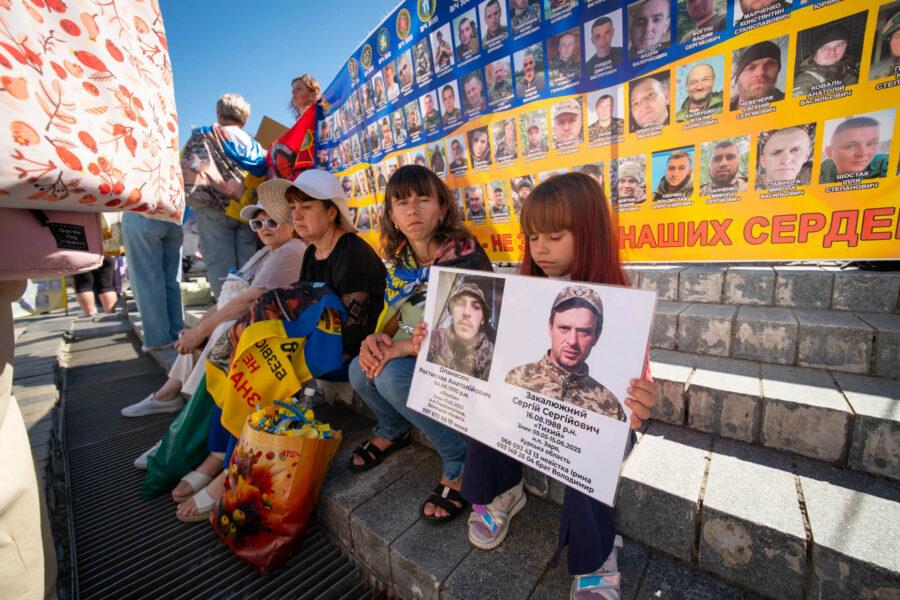
Photo: Roman Chyhrynets