If we go back to the beginning, Kyiv stands out from Europe’s 43 capitals primarily because of its age. It is among the nine capital cities with a history spanning more than 1,000 years. But, of course, age and history are not what matter most to today’s travellers and Kyiv residents — what matters is what you can enjoy and discover in the city right now. So, what makes Kyiv different from other European capitals through the eyes of a Ukrainian photographer and visiting foreigners?
Warning: Air Raid Alert
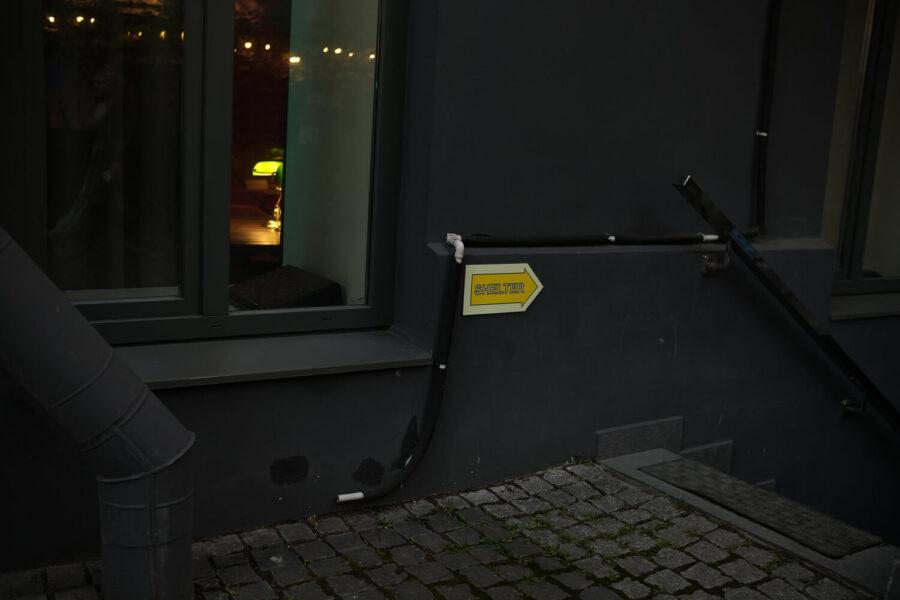
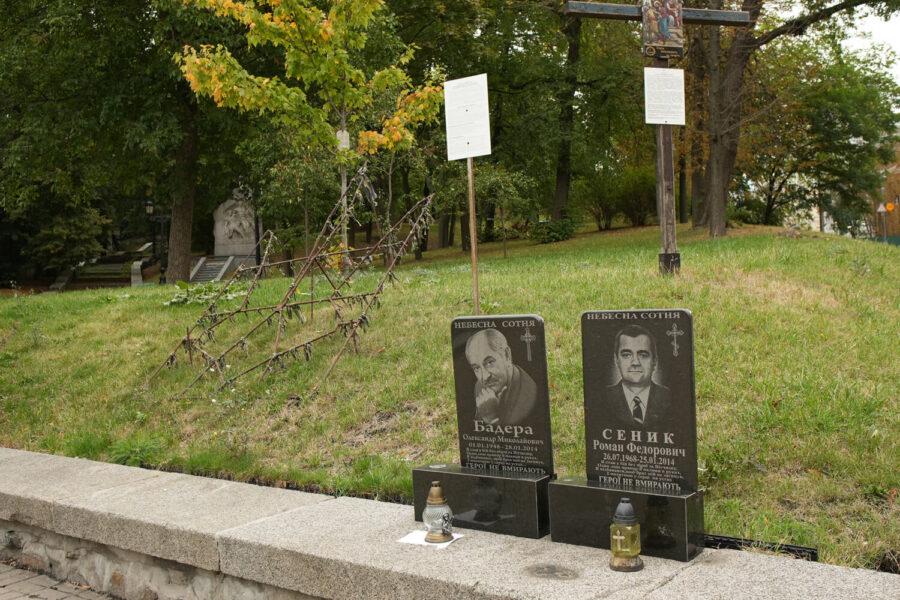
Unfortunately, age also brings enormous challenges. Alongside its exceptional beauty and distinctive character comes a record number of wars, sieges, assaults and bombings.
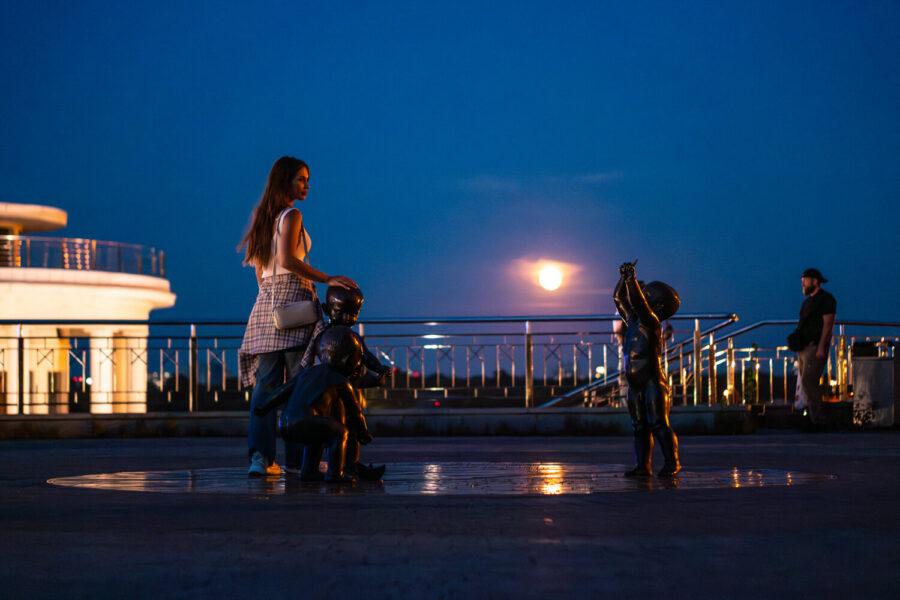
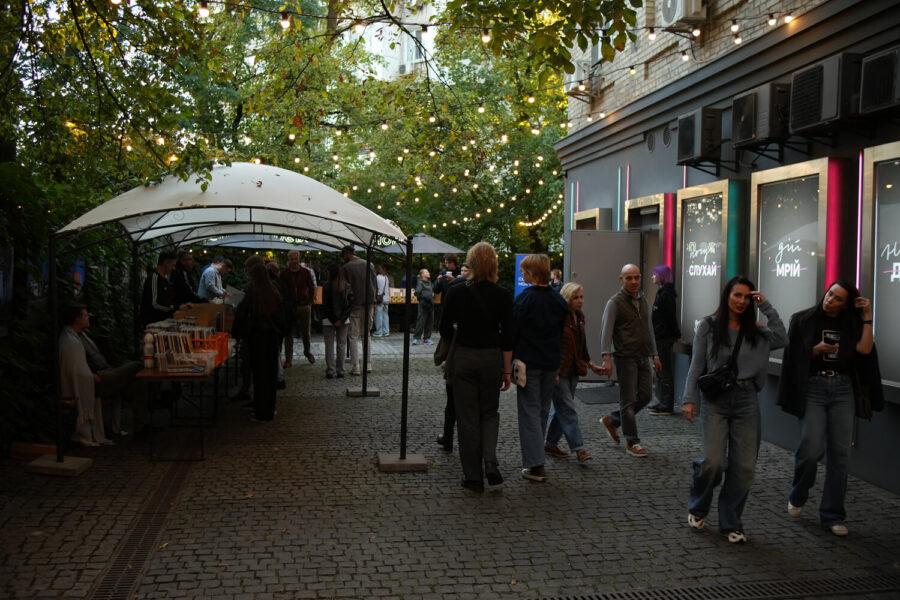
And today, once again, what sets Kyiv apart from other European capitals is above all the war: air raid alerts, explosions, deaths, destruction and curfew. Yet, in the fifth year of the war, despite being the primary target of Russia’s invading forces, Kyiv has not surrendered, has not been reduced to ruins and has not even emptied out. We are still here — working, walking around, developing and enjoying ourselves.
“There is destruction. How could there not be? Russia has sent many thousands of missiles and drones towards the city. But Kyiv is enormous — before the war, it had a larger population than Paris or Rome — and it would take far more bombing for obvious signs of damage to start appearing on every street,” writes novelist James Meek in The Guardian, describing his impressions of Kyiv in 2026.
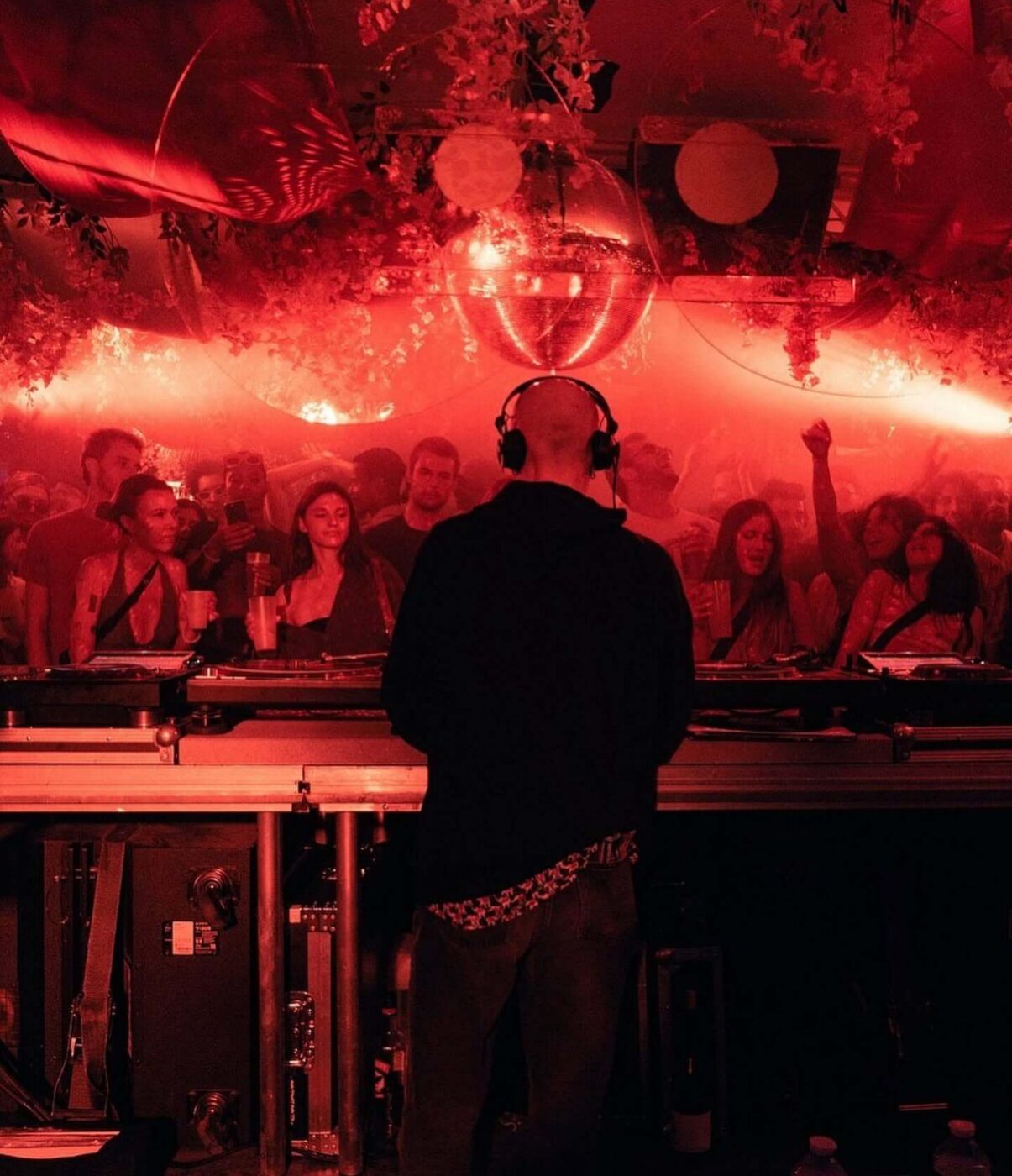
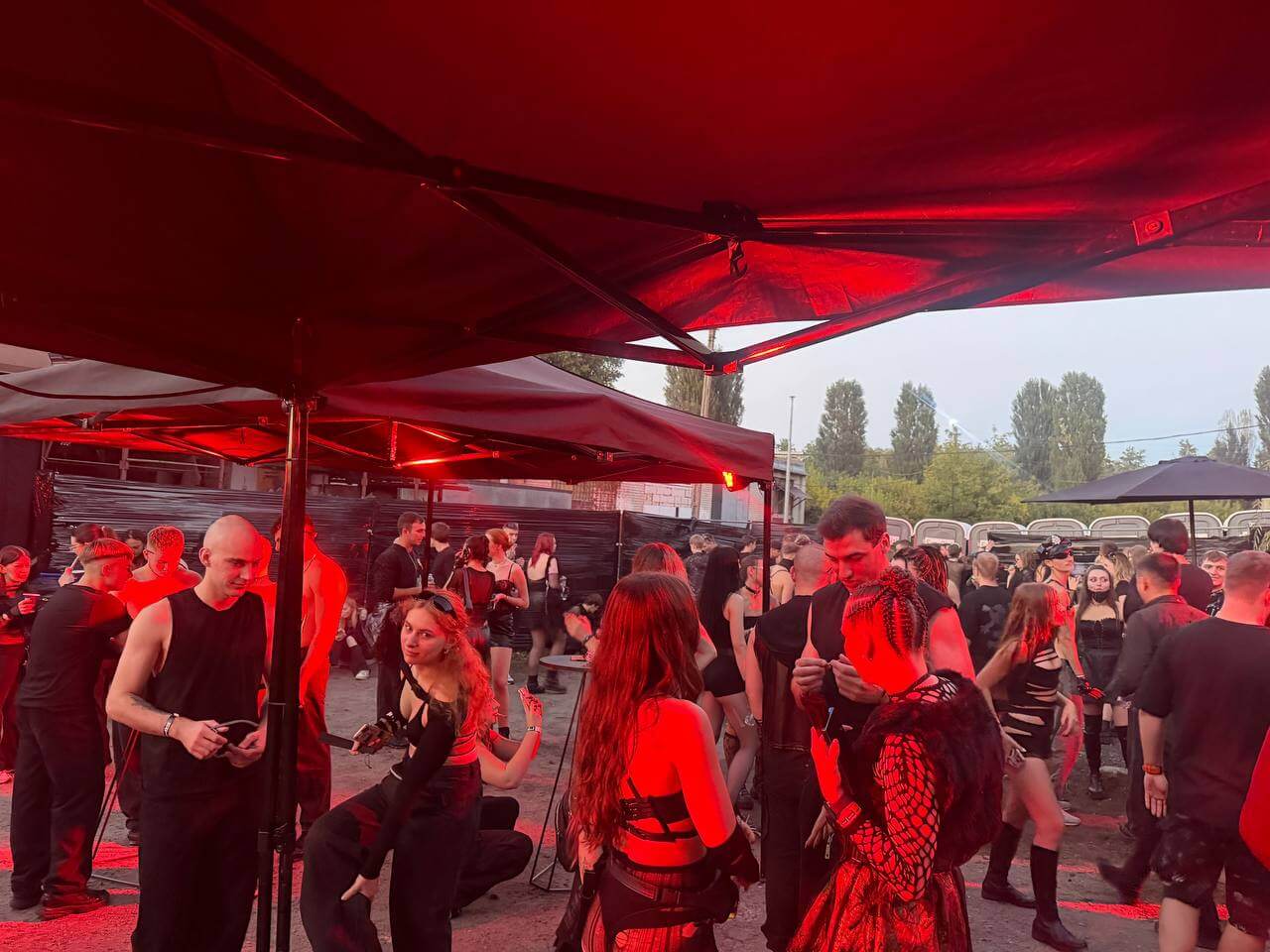
Of course, when the full-scale invasion began, Kyiv came to a standstill. But within just a few months, the city began returning to its everyday life. By late June 2022, independent British photographer and journalist Vincent Mundy was already visiting the first festival in Kyiv since the outbreak of the full-scale war:
“For more than a decade, the 19th-century factory buildings at 31 Nyzhnoiurkivska Street have been a favourite venue for Kyiv’s rave nights, hosted by local nightclubs Closer, Mezzanine and Otel’. Everything came crashing down when Russia invaded Ukraine: most of the people who worked and socialised here either fled to safer places, joined the army or began volunteering. But today, a new dawn is breaking for the ribbon factory with On Time — the country’s first major alternative music and arts event since the invasion five months ago. Faces are glowing and people are smiling in the gardens around the dance floor, seemingly eager to hug and kiss after a long and involuntary separation. As the sun begins to set and curfew approaches, we head beneath the lush gardens near one of the outdoor bars…”
In 2025, French correspondents wrote that, amid the realities of war, the Ukrainian capital displays its wounds just as clearly as it demonstrates its vitality:
“Over the past three years, Kyiv has transformed from a capital with columns of Russian tanks at its gates into the best-defended city in the country. A city where children go to school, their parents go to work, people dance at techno clubs such as the legendary K-41 and Closer on weekends, and couples stroll through parks without worrying too much about warning sirens.”
And in October 2026, they noted that even after attacks on Kyiv intensified both day and night from late August onwards, there were no signs of panic or a new mass exodus:
“Although fear can sometimes be seen in the eyes of passers-by, and although some rush to the nearest shelter during the countless air raid sirens, many continue going about their daily business as if nothing had happened. In Ukraine, calm is also fertile ground for resistance.”
No Longer Just the Most Convenient and Fastest Means of Transport
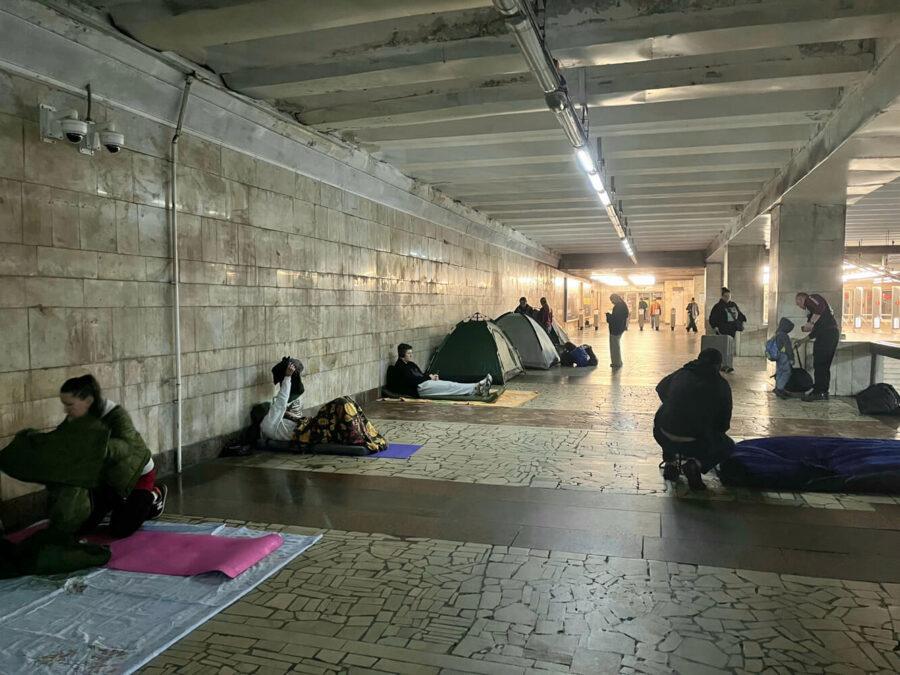
The Kyiv Metro makes it possible to travel quickly from one end of the city to the other without getting stuck in traffic. During the war, it has also become the safest shelter from enemy attacks. In 2026, as Russian bombardments intensified dramatically, the underground stations became a permanent place for some Kyiv residents to sleep at night. French journalist Thomas d’Istria highlights this bitter reality:
“More and more residents of the Ukrainian capital prefer to head down to metro stations as darkness falls, taking preventive measures rather than waiting for possible air raid alerts. Thirteen-year-old Ivan and his 41-year-old mother, both wearing tracksuits, are among those preparing to spend the night underground, accompanied by their elderly cat. Since late May, despite the apparent threat of a wave of Russian bombings, the mother and son have systematically gone down to the metro stations to sleep rather than spend the entire night at home in a state of nervous tension.”
Yes, we live in wartime, but Kyiv is about more than the war. What is the city like when viewed beyond the realities of the conflict?
“Everything in Kyiv Is Grand: Not Just the Churches, but Also the Monuments and Museums”
That is how the world-famous Canadian travel bloggers Frank and Lisette, who have visited dozens of countries, describe Kyiv, considering it one of Europe’s most striking cities:
“Kyiv’s tourist attractions are incredible. We haven’t spent much time in Orthodox Europe (with Belgrade and Skopje being the exceptions), but the Orthodox churches in Kyiv impressed us far more than anything we had seen before.
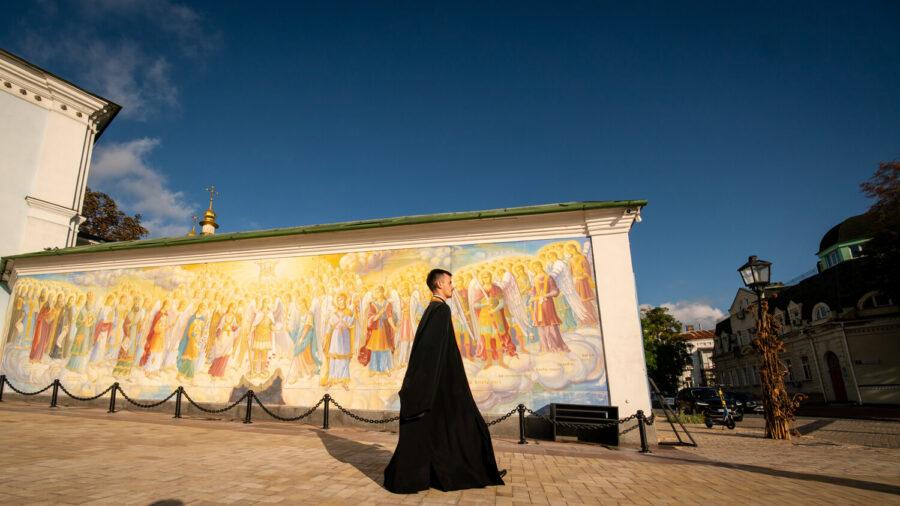
Before coming here, I thought Kyiv might bring back memories of some Balkan capitals: Zagreb, Belgrade, Sarajevo or Skopje — cities with a certain austere charm. No. In terms of development, Kyiv is far ahead of any of these cities. The architecture is very different. Perhaps Prague or Budapest? No. The architecture and topography of both cities are very different. In fact, we cannot think of a single city that resembles Kyiv. If you have travelled only around Western Europe, you will find that Kyiv is unlike anything you have ever seen.”
Kyiv’s architecture has evolved over the course of fifteen centuries. Its oldest surviving landmarks include Saint Sophia’s Cathedral, the Golden Gate, the Dormition Cathedral of the Kyiv Pechersk Lavra, the Church of the Saviour at Berestove, the Saint Michael’s Cathedral of the Vydubychi Monastery and Saint Cyril’s Church. These monuments have survived from the glorious days of Kyivan Rus, dating back to the 11th century, although some have been partially rebuilt or restored. They represent the monumental stone architecture of the princely era.
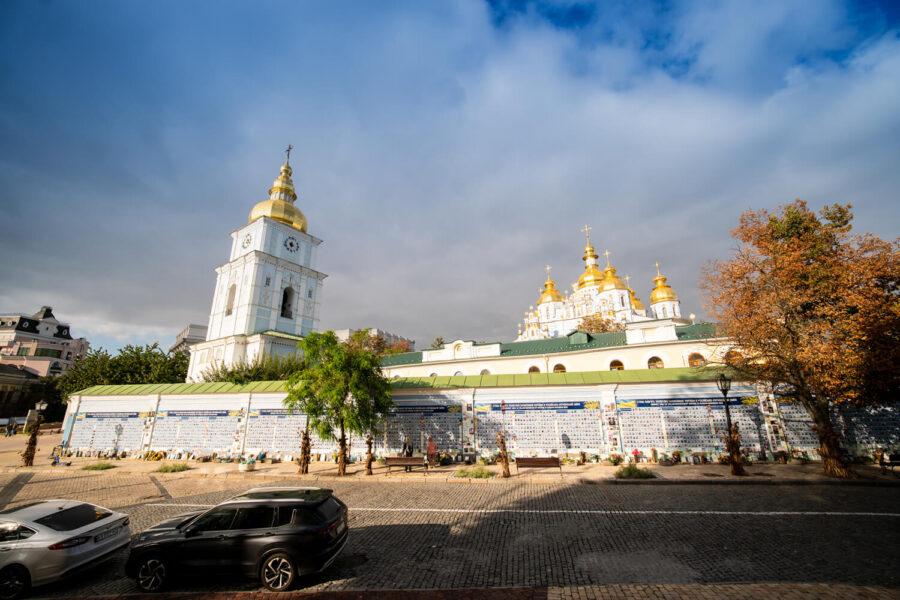
Kyiv has also retained traces of the Lithuanian-Polish period, the early modern era, Ukrainian Baroque, Late Baroque and Rococo, Classicism, Historicism and Eclecticism, Art Nouveau, Ukrainian Architectural Modernism, Constructivism, Stalinist Neoclassicism, Soviet Modernism, the era of independent Ukraine and even contemporary architecture.
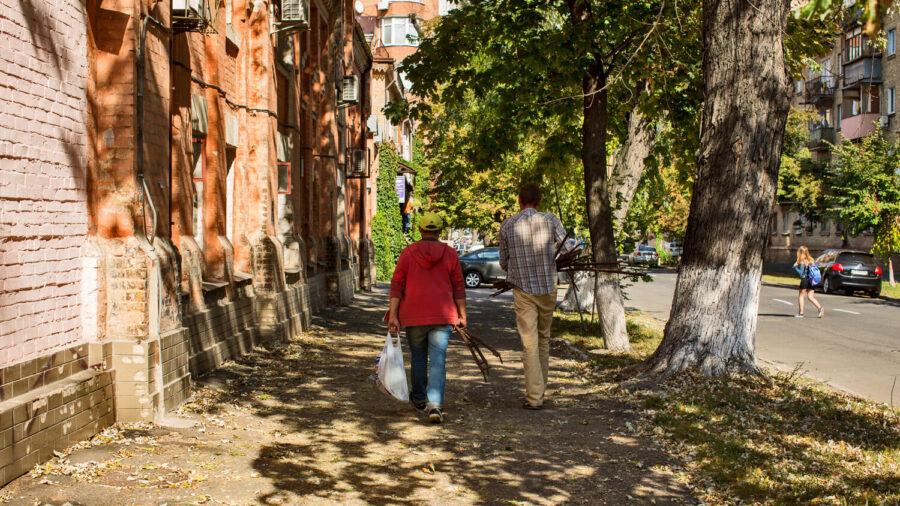
Yes, Kyiv continues to develop even during the war. Today, around 30 architectural styles coexist here. You can encounter several layers of architectural history simply by walking down a single street. And despite numerous wars and destruction, many historic buildings have survived.
“I could never have expected Kyiv to be so incredible. The moment I stepped out onto Baseina Street, it took me only about 30 seconds for the city’s atmosphere to get into my blood. I felt absolutely wonderful walking along Khreshchatyk towards Independence Square. It was one of the most beautiful monuments and squares I had ever visited. And that tall column with an angel at the top, rising into the deep blue sky… flowers and waterfalls all around. I climbed the hill to admire some of Kyiv’s most magnificent churches. Then came a park with a breathtaking view of the city and the river below,” enthuses independent American travel blogger Ramblin’ Randy, who has visited 193 countries, about central Kyiv.
Travellers also compare Kyiv’s human qualities with those of the capitals closest to us. And we stand out remarkably for our friendliness, not only in comparison with Moscow, which is relatively European in character, but also with distinctly European Warsaw:
“We didn’t have a single unfriendly experience: whenever we interacted with people in Kyiv, they were always pleasant. We think Ukrainians are generally open, tolerant and willing to help. Ukrainians rank at the very top of our list of favourite people we have encountered while travelling. We would never have expected this, considering that Kyiv is sandwiched between Poland (where we genuinely haven’t had good experiences) and Russia (whose people have a reputation for being cold and stony).”
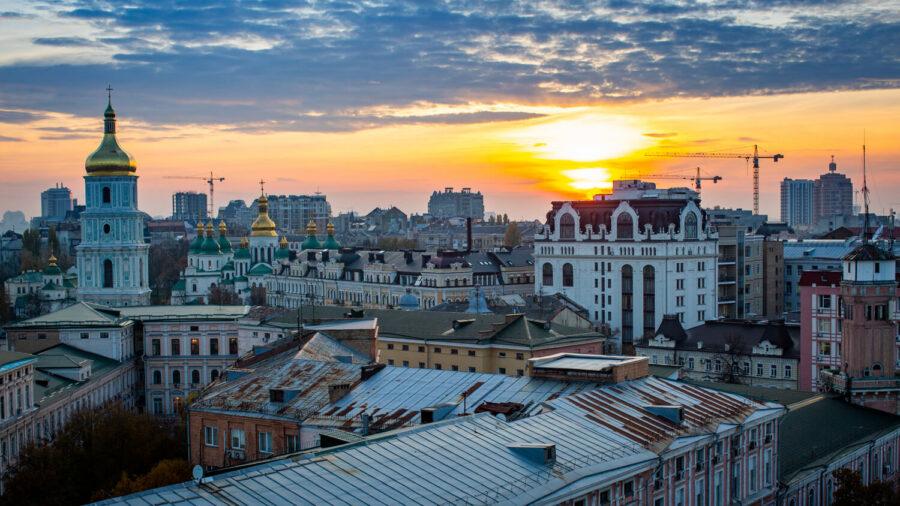
“They Rise from Kyiv’s Hilly Terrain Like Darts Thrown Blindfolded”
At the same time, professional journalists cannot help but notice another side of Kyiv’s architectural landscape — a dark and unsettling one.
James Meek also points out the architectural monstrosities of contemporary Kyiv:
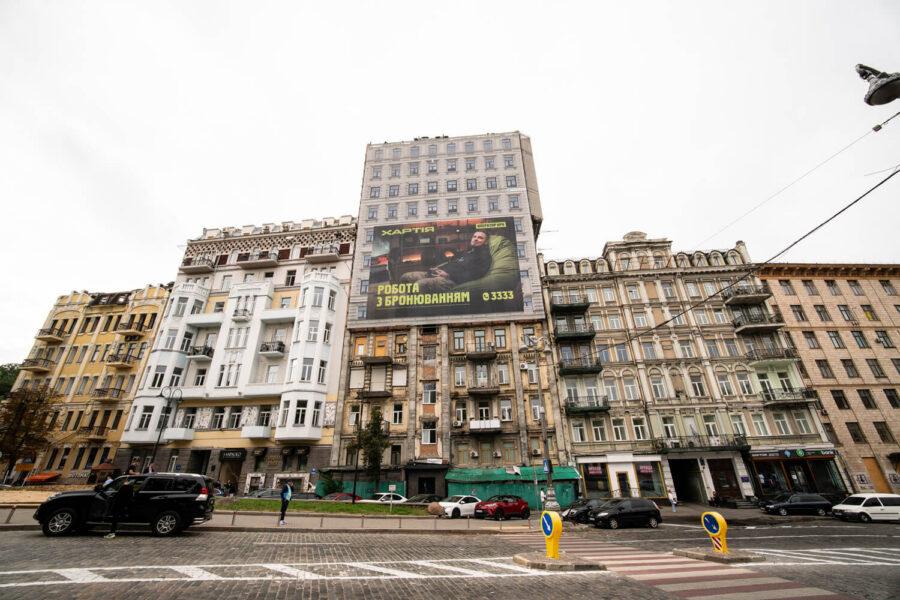
“One striking and obvious change for anyone who remembers the city in the 1990s is the proliferation of speculative apartment blocks and office buildings from the 2000s and 2010s — mostly around 20 storeys high, usually topped with an awkward mansard roof reminiscent of neoclassicism. They rise from Kyiv’s hilly terrain, seemingly descending haphazardly among the older buildings, like darts thrown blindfolded.”
He then draws attention to painful and irreversible losses for which the war bears no responsibility:
“I tried to find the apartment where I had lived in Kyiv for an extended period, opposite the opera house. It was in an inner courtyard behind a beautiful 19th-century façade. But I couldn’t find it because it had been demolished, along with an equally beautiful building on the neighbouring corner, to make way for a grandiose pseudo-modernist business centre…”
Historic Kyiv has its defenders — civic activists fighting to preserve the city’s architectural heritage. Recently, they managed to partially save Zhytnyi Market. American journalist Charlotte Higgins writes about their efforts:
“On a sunny day in Kyiv, Solovyov (editor’s note: a Kyiv-based activist) pointed out the unique architectural features of Zhytnyi Market, one of the most recognisable landmarks in central Kyiv. The building has a striking concave concrete roof that hangs over a vast market hall, where a dwindling number of traders sell meat, cheese and vegetables.”
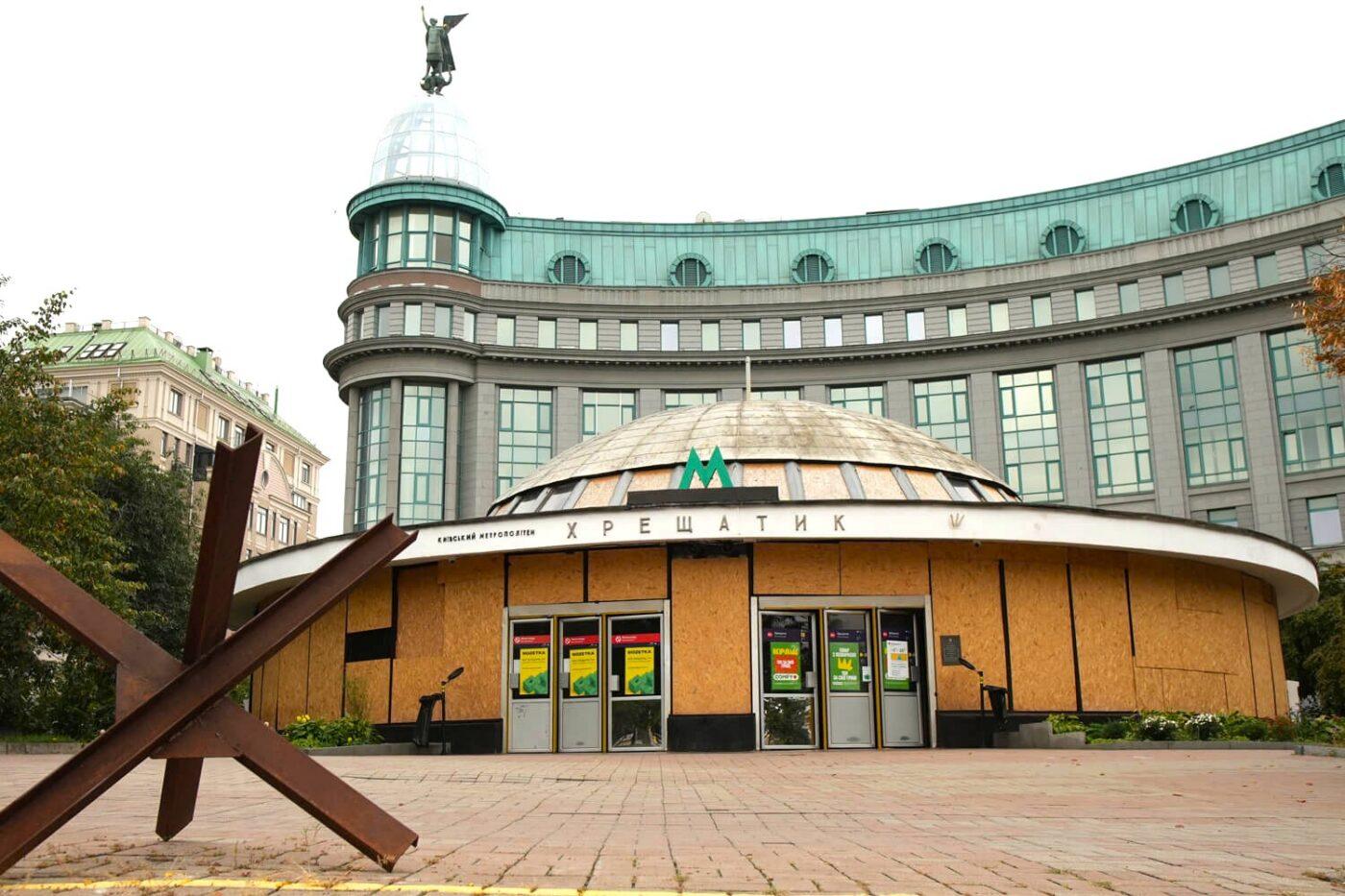
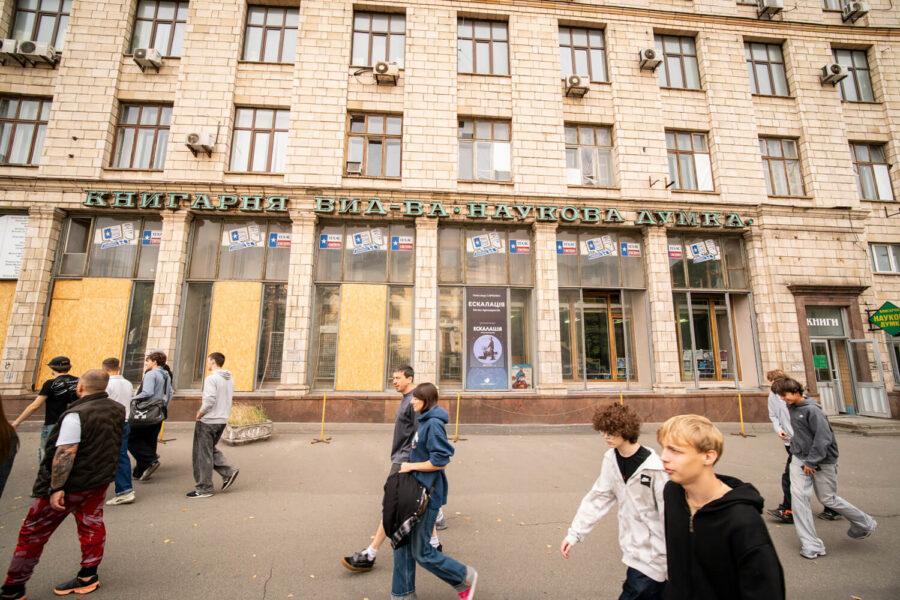
Journalist Luke Harding takes the story further, drawing attention to a distinctive wartime feature of Kyiv’s architecture: after every attack by the Kremlin, workers board up shattered windows with plywood and try, wherever possible, to save residential buildings:
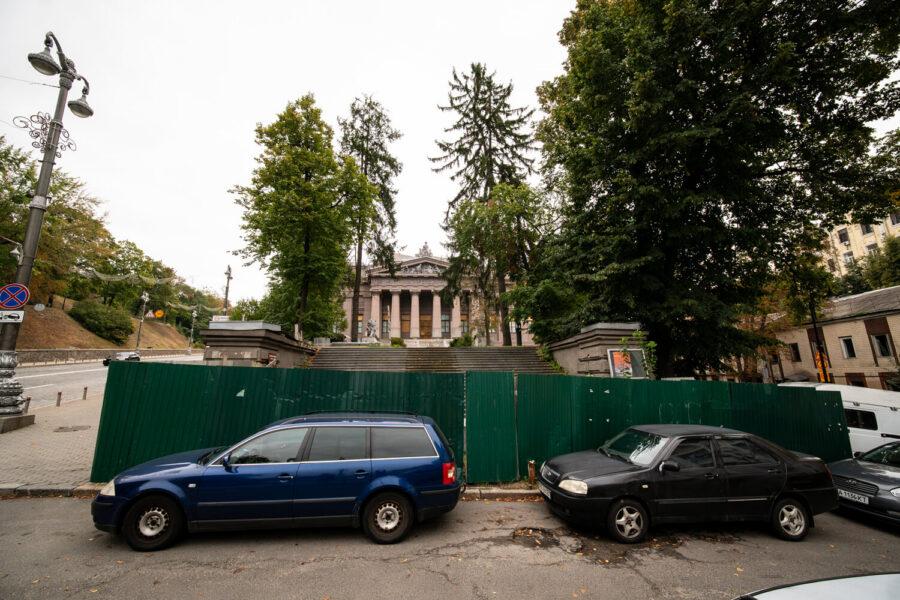
“Amid the bombardment, a group of activists is trying to preserve the city’s neglected mansions, built in the playful style known as Ukrainian Modernism. But Russia is only one of the threats. Heritage activists say they face unscrupulous developers who demolish architectural landmarks, corrupt officials and a ruling class that is indifferent or hostile to the city’s rich architectural history. The harsh winter climate adds another burden. The Soviet Union also inflicted enormous damage on the capital by reconstructing its Khreshchatyk Street after the Second World War so that it could accommodate tanks and communist military parades.”
How Nature Shapes Kyiv’s Urban Landscape
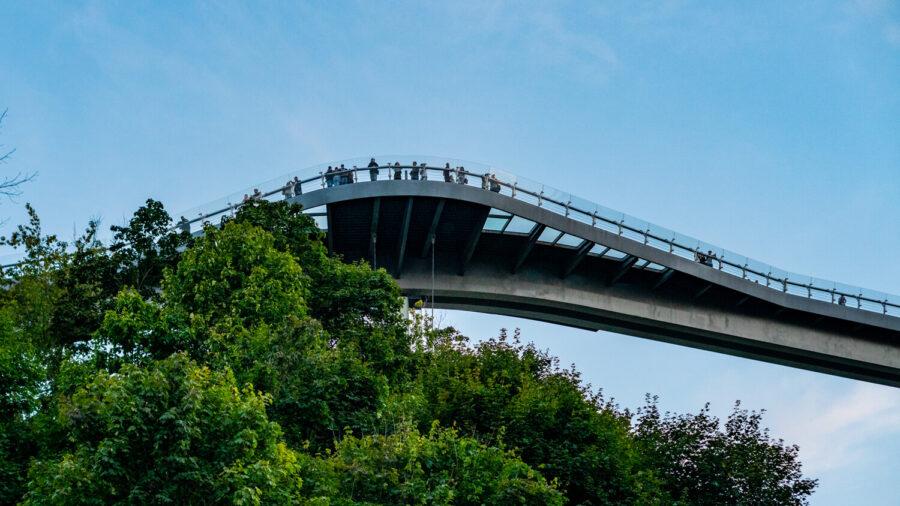
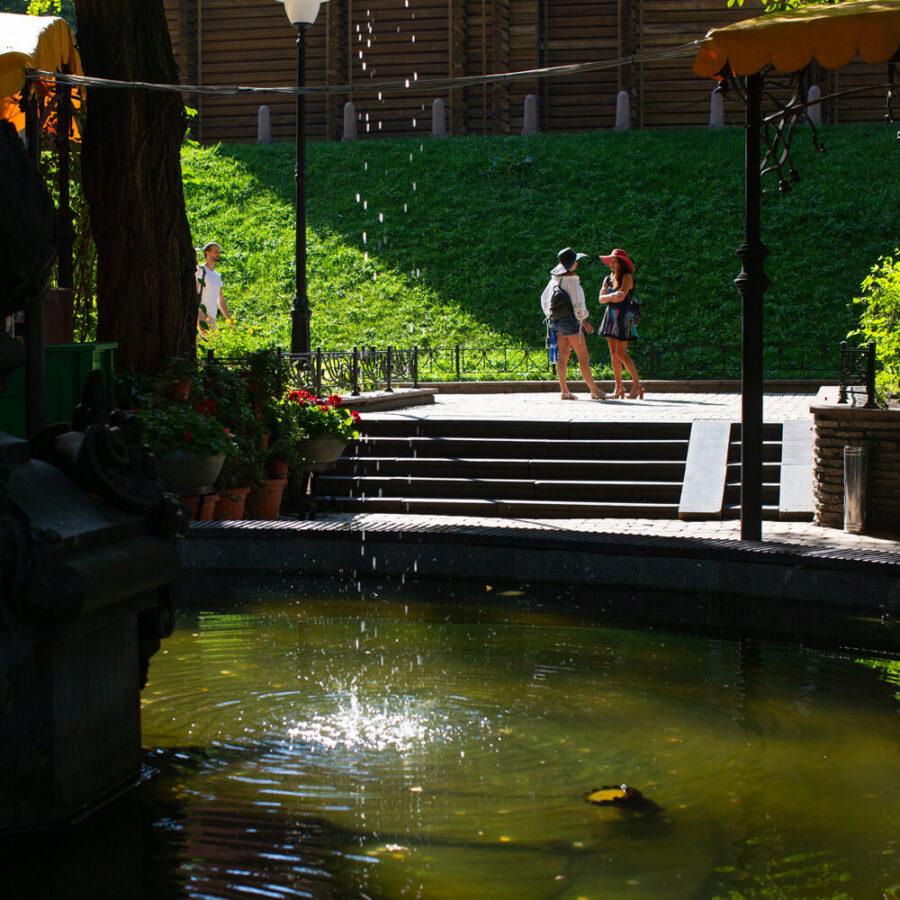
But it is not only its unique architecture that makes Kyiv stand out — its natural environment is equally extraordinary. Just consider the chain of parks that allows you to walk through the entire vast city centre, from the heights of the Pechersk Hills, starting right by the Verkhovna Rada, past the outskirts of Khreshchatyk and down to the low-lying Podil district.
Frank and Lisette express their surprise at just how green and hilly Kyiv is — something they had never imagined:
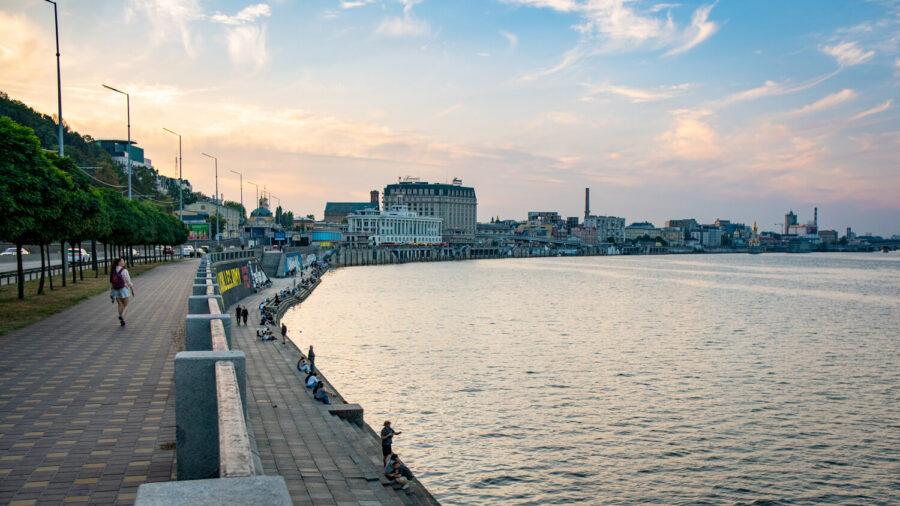
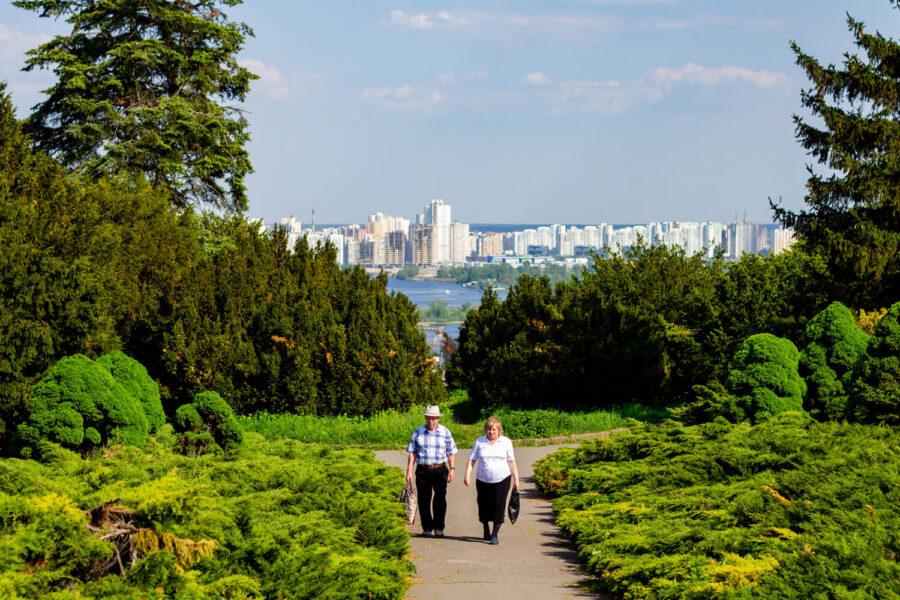
“The right bank (where the city centre and major attractions are located) is lined with parks overlooking a vast green expanse of islands that separate the right and left banks. You can spend an entire day walking through the hilly parks above the Dnipro, looking out over the city: on one side, a mixture of architectural styles; on the other, the river and the left bank beyond it.”
The international analytical project HUGSI.green notes that green spaces account for 42% of Kyiv’s total area, while tree canopy coverage stands at 38%:
“According to research on the percentage of urban areas covered by trees in Europe, 31.7% of cities rank lower than Kyiv.”
So Kyiv is far from being Europe’s greenest city. However, its uniqueness in this respect lies in the way natural elements are woven into the very fabric of the city.
There is the Dnipro River, with its numerous islands — Trukhaniv, Muromets, Zhukiv, Dolobetskyi, Venetian, Kozachyi and Olzhyn — located directly within the capital, some of them almost in the very heart of the city. There are also floodplain areas (the Osokorky Meadows, Troieshchyna Meadows, Tiahle and Redkyne lakes, and the Bobrivnia natural area): wetlands, natural meadows and lake ecosystems right in the middle of residential neighbourhoods.
Then there are vast forests (Holosiivskyi and Sviatoshynskyi forests, the Pushcha-Vodytsia forest park and the Dnipro Islands Regional Landscape Park), which you can wander into while exploring Kyiv’s architectural beauty.
And what about the Dnipro’s elevated right bank, with its hills, steep cliffs, green slopes and panoramic river views? You can enjoy them while walking through Volodymyrska Hill and the Pechersk slopes, or exploring Lysa Hora and Bahrynova Hora — once again, right in the heart of the city.
Kyiv also boasts deep ravines, including Smorodynskyi, Babyn, Tsymbaliv and Sovska Balka.
When it comes to natural wealth, Kyiv can be compared to Oslo, Stockholm, Helsinki, Prague, Ljubljana, Rome and Paris. But none of these capitals can boast quite the same combination of all these elements with river landscapes. In the Northern European capitals, the landscapes are maritime, while in the others, natural areas are mostly found around the outskirts of the cities. Only Rome, like Kyiv, has major green spaces located in the city centre and nearby, extending from the urban area towards the south-eastern outskirts. So the Dnipro is perhaps our greatest source of pride.
Two Banks, Two Vast Urban Worlds
Many European capitals have a river running through their city centres — Budapest, Prague, Warsaw, London, Paris, Rome, Belgrade, Bratislava, Riga, Dublin, Skopje, Berlin and Vienna. But in Kyiv, the river does more than simply divide the city: it creates two distinct and contrasting urban worlds. This feature is also found in Budapest, Warsaw, Belgrade and Bratislava. Yet Kyiv stands apart from these cities through its unique combination of the broad Dnipro, numerous islands, the high and hilly right bank, the flat left bank and vast natural areas stretching along the river.
While exploring Kyiv, James Meek ventured into its inner workings, making his way to the left bank:
“It is a sprawling forest of apartment blocks, densely built up during the Soviet era and even more so since independence. Although you might see this as a Western middle-class prejudice against ‘estates’, developments and suburbs, today it is a mix of private and municipal housing. For a long time, Kyiv residents appreciated its modernity, open spaces and larger apartments. But Kyiv’s Soviet-era utilities infrastructure, which private owners had underinvested in even before the war, is organised in such a way that the left bank has been disproportionately affected by Russian strikes.”
Yes, what makes Kyiv so unique has also become one of its greatest vulnerabilities during this long and exhausting war. The writer recalls travelling by metro from the right bank to the left earlier this year when the air raid sirens began to wail:
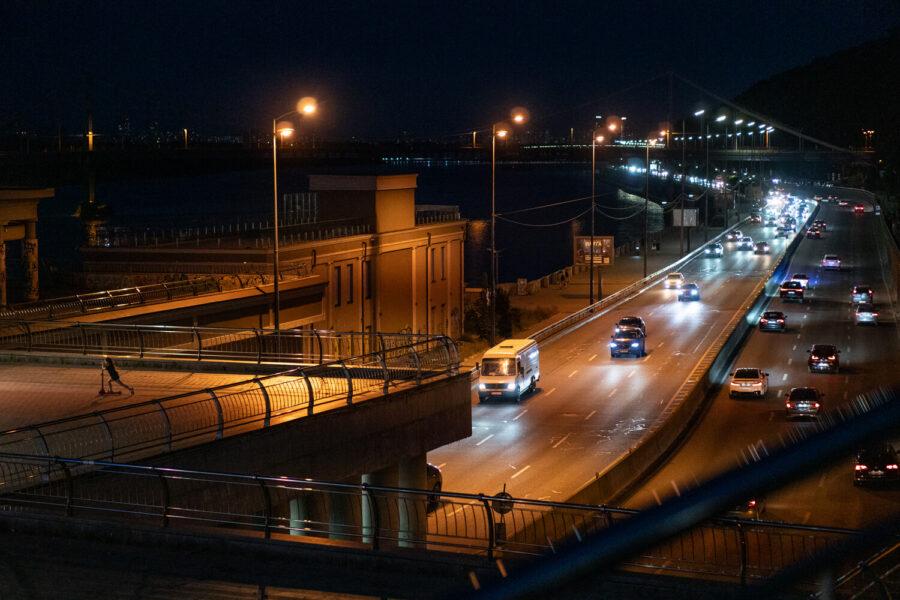
“Although the network continues to operate, train services to the newer part of Kyiv on the left, or eastern, bank of the Dnipro have been suspended. Many people were left milling around in the middle of their journey, staring at their phones. They looked exhausted. It hinted at a million enormous personal efforts made every day simply to keep going, to get the essentials done, to get to and from work, to feed a family.”
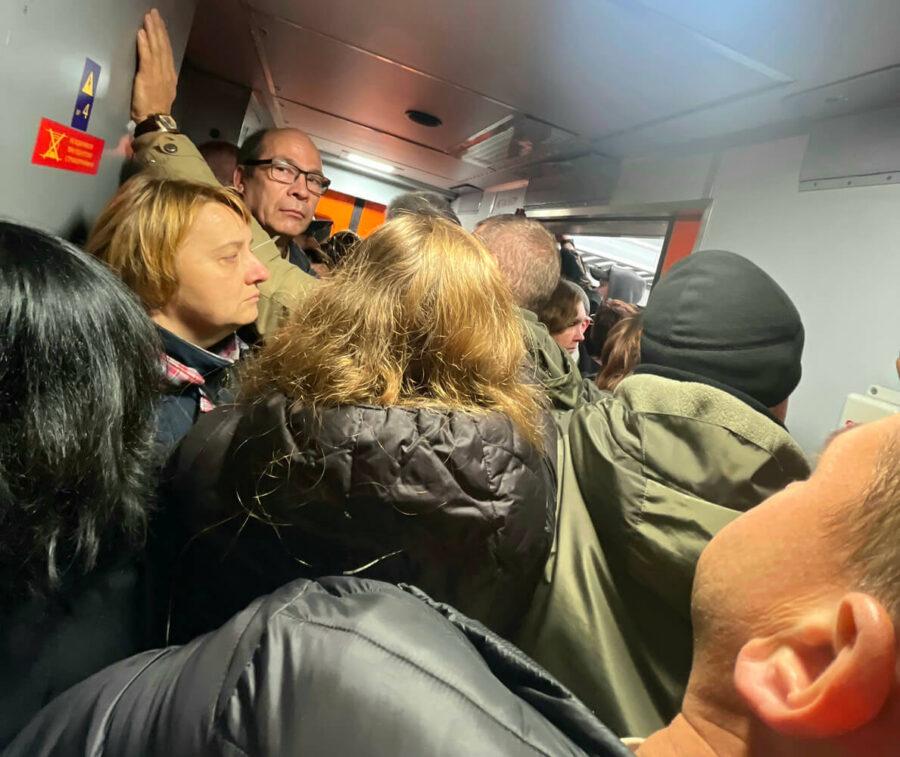
And now, in October 2026, this vulnerability has become even more pronounced: the Russians have begun targeting Kyiv’s bridges for the first time. Just a few nights ago, the Northern Bridge was hit by the enemy once again, forcing Kyiv residents to spend around three hours getting from one bank to the other. The city railway comes to the rescue, supported by trams, trolleybuses, buses and minibuses. Taxi fares skyrocket, enormous traffic jams form, and public transport is packed to capacity. In some places, glass doors and windows crack under the pressure of the crowds.
Yes, Kyiv Has Got Used to the War
Parties start around sunset and end at 10 p.m. so that everyone can make it home before curfew, which currently runs from 1 a.m. to 5 a.m. Performances and concerts try to find venues in basements so they can continue uninterrupted during air raid alerts. And Kyiv residents are always ready not only to take shelter but also to get a proper night’s sleep there.
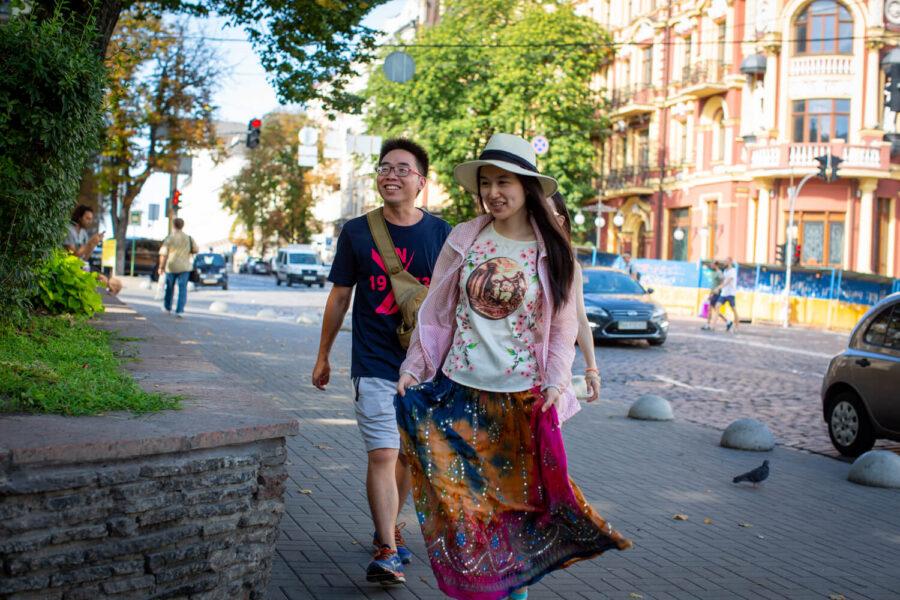
Yet, through it all, Kyiv continues to live. As Clara Lindström, an analyst at the Stockholm Centre for Eastern European Studies (SCEEUS), specialising in Ukraine’s integration into the EU, observes, the city remains just as vibrant as it was before the war:
“Kyiv is one of my favourite cities. Now, almost 1,000 days after Russia’s full-scale invasion, much has changed in Kyiv: sandbags by doorways, statues covered with wooden panels, fewer adult men, and a constant state of readiness for air raid alerts. Yet despite all this, Kyiv remains just as fashionable, vibrant and full of life as I remember it.”
Most importantly, Kyiv is and will remain free and Ukrainian. And perhaps, among all the capitals of Europe, it is the one that most deserves the title of ‘Europe’s Capital of Freedom’ today.
Photos: Roman Chyhrynets