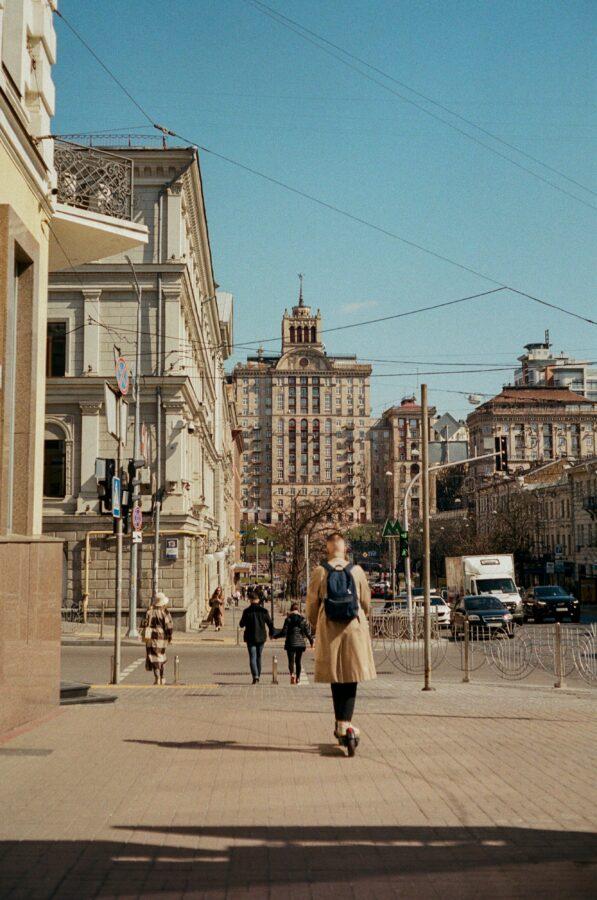


Kyiv is a city that can be recognized even by those who have never visited it. Every city speaks through symbols — silhouettes, flavors, songs, public spaces, and landscapes. Kyiv’s language, however, is distinctive: it is at once ancient and European, spiritual and urban, historical and fiercely modern.
For centuries, Kyiv has been described as a city of origins. Medieval chronicles called it “the mother of cities,” emphasizing its central role in Eastern Europe. Writers, travelers, and historians have long noted that Kyiv feels layered — a place where history does not sit quietly behind glass, but remains visible in streets, squares, and everyday rituals.
This article brings together ten key symbols of Kyiv — official and unofficial — that help international readers understand the city intuitively: what these symbols mean, where they come from, and why they matter today.
Symbols That Speak at First Glance
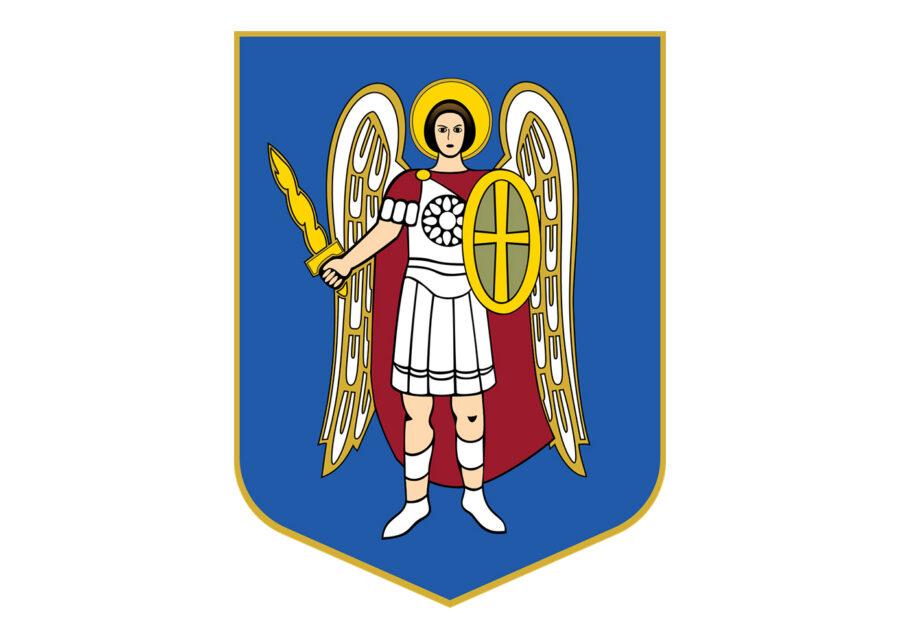
The Coat of Arms and Flag: Archangel Michael as the Guardian of the City
The official coat of arms of Kyiv features Archangel Michael, depicted with a sword and shield against a blue background. The modern version was approved in 1995, but the association between Kyiv and Archangel Michael goes back much further.
For an international audience, this image is immediately legible. Across European tradition, Archangel Michael represents protection, justice, and resistance to evil. The sword signifies readiness to defend, while the shield conveys resilience. Kyiv’s heraldic symbol positions the city as under protection — and ready to protect itself.
The Golden Gate: An Entrance into Medieval Kyiv
The Golden Gate is one of Kyiv’s most recognizable historical landmarks. Initially built in the 11th century during the reign of Prince Yaroslav the Wise, it once served as the main fortified entrance to the city.
Today, the Golden Gate functions as both a museum and a powerful visual reminder that Kyiv is not a young capital, but a city with deep medieval roots. For European and American readers, the presence of such fortifications places Kyiv naturally alongside other European historic towns shaped by walls, gates, and defensive architecture.

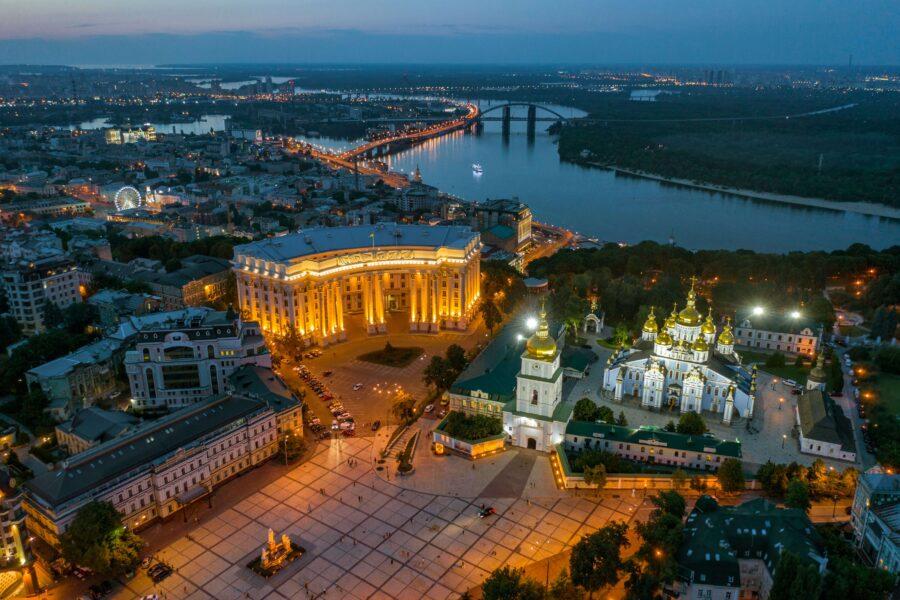
Saint Sophia Cathedral: Wisdom, Continuity, and UNESCO Heritage
Saint Sophia Cathedral is more than a religious monument — it is Kyiv’s architectural memory. Built in the 11th century, it was conceived as a dominant structure within the city’s landscape, meant to be seen and recognized from afar.
Today, Saint Sophia Cathedral is part of a UNESCO World Heritage Site, a status that signals its global cultural value. For international visitors, UNESCO recognition acts as a universal marker of significance, positioning Kyiv firmly within the shared heritage of world civilization.

Symbols of Modern History and Civic Identity
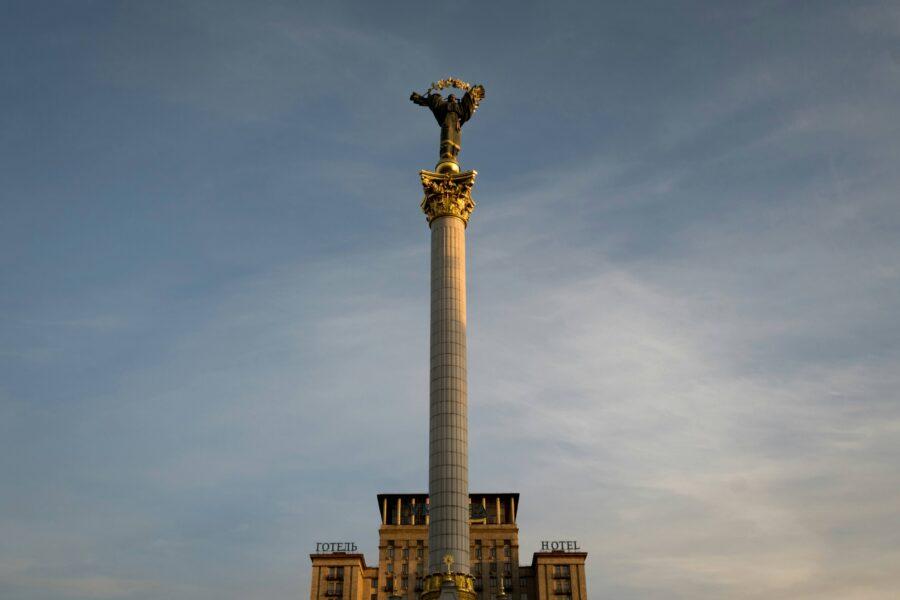
Maidan Nezalezhnosti: A Square Where History Is Made
Maidan Nezalezhnosti, or Independence Square, is the heart of modern Kyiv. While it functions as a central urban space, its deeper meaning lies in its role as a stage for civic action.
Maidan became globally known during the Orange Revolution of 2004 and the Revolution of Dignity in 2013–2014. For international audiences, Maidan is easy to understand as a symbol of public participation, democratic aspirations, and collective voice — a place where citizens actively shape their country’s future.
The Anthem of Kyiv: A Line Everyone Knows
Few cities are so closely associated with a single line of song. “How can one not love you, my Kyiv?” — written in 1962 — has long lived in the hearts of residents. In 2014, the song officially became the city’s anthem.
For outsiders, this anthem represents something significant: Kyiv’s emotional openness. Beyond official symbols and monuments, the city has a shared phrase of affection — a cultural shorthand for belonging.
Living Symbols: Nature and Everyday Experience
Kyiv’s Chestnut Trees: A City Recognized by Its Leaves
Kyiv is often called the city of chestnut trees. Over time, chestnuts have become one of the most enduring unofficial symbols of the capital, especially in spring, when the trees bloom along streets and boulevards.
This association resonates easily with international readers. Just as Paris is remembered for plane trees or Washington, D.C., for cherry blossoms, Kyiv is remembered for chestnuts. Nature becomes branding — a sensory memory defined by color, shade, and season.

The Dnipro River: The City’s Natural Axis
The Dnipro River is the geographical and emotional backbone of Kyiv. It shapes the city’s skyline, bridges, viewpoints, and rhythm. The contrast between high riverbanks, islands, and open water gives Kyiv a distinct spatial identity.
In global travel narratives, rivers often define cities — the Seine, the Thames, the Danube. Kyiv and the Dnipro belong to the same lineage: cities understood through their rivers.
Culinary Symbols: Tastes That Carry Memory
The Kyiv Cake: A Dessert That Became a City Icon
Created in 1956, the Kyiv Cake has long been associated with celebration and hospitality. For decades, it was one of the most popular edible souvenirs visitors brought home.
For international audiences, the Kyiv Cake serves as a cultural symbol because it is easy to understand: a local dessert with a strong identity, a recognizable name, and a story. It allows the city to be remembered through taste.

Kyivska Perepichka: Street Food as a Ritual
Some places explain a city better than museums. Kyivska Perepichka, a modest street-food stand serving a single, simple dish, is one of them.
For travelers, this symbol speaks clearly: authenticity, routine, and shared experience. Long queues, unchanged recipes, and a fixed location turn everyday food into a cultural ritual — something visitors feel compelled to try.

Symbols You Discover on Foot
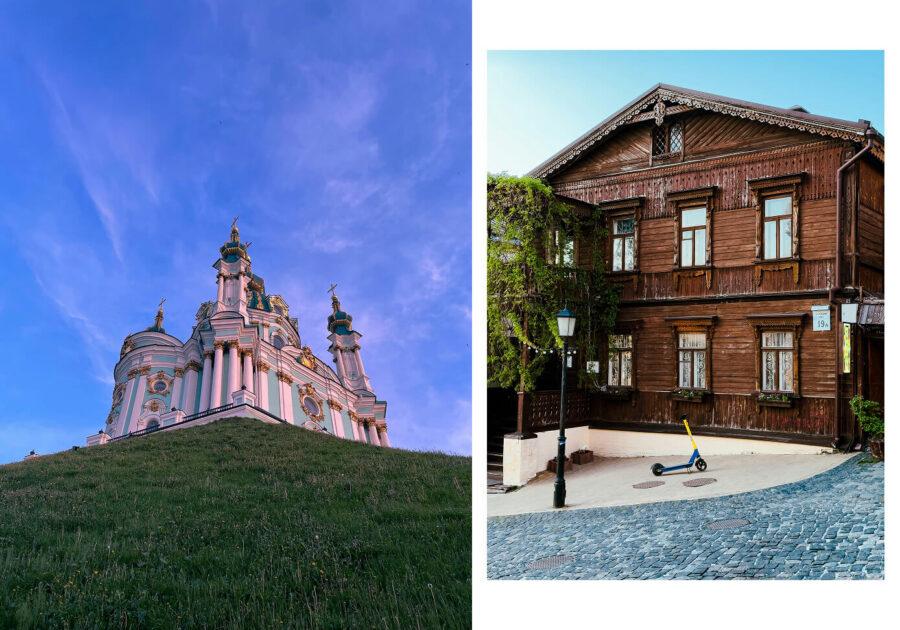
Andriivskyi Descent: Kyiv’s Montmartre
Andriivskyi Descent connects Kyiv’s upper city with the historic Podil district. Known for its artists, galleries, souvenir stalls, and views, it is often compared to Montmartre in Paris.
For foreign visitors, the appeal is immediate: history, creativity, and walkability come together in one place.
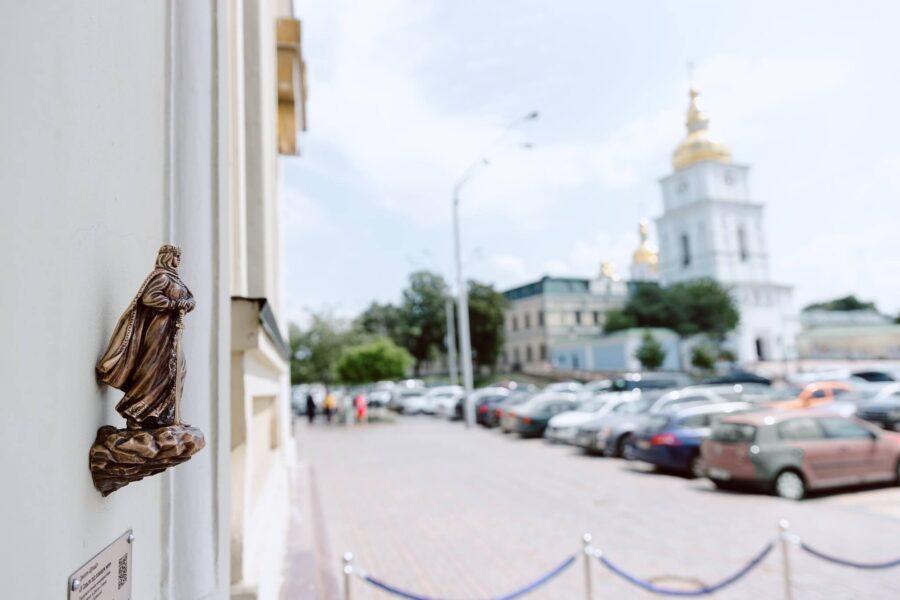
Shukai!: Mini Sculptures as an Urban Game
Modern Kyiv embraces playfulness. The Shukai! project consists of small bronze sculptures scattered across the city, each telling a story and inviting discovery.
This format feels familiar to Western audiences — similar to urban art trails in Berlin or London — yet distinctly local in content. It turns Kyiv into an interactive narrative rather than a static map.
Kyiv as a City of Words and Meaning
Beyond physical landmarks, Kyiv lives in language and quotation. Writers have described it as a city of beauty and memory; historians emphasize its continuity; international institutions recognize its universal cultural value.
Taken together, Kyiv’s symbols form a coherent portrait:
an archangel representing protection,
gates and cathedrals speaking of continuity,
a public square symbolizing freedom,
a river and trees shaping everyday perception,
Food and song ground the city in lived experience.
Kyiv is not a city that needs translation — its symbols speak for themselves.
FAQ: Common Questions About Kyiv’s Symbols
— What are the main symbols of Kyiv?
The official symbols include the coat of arms and flag with Archangel Michael. Widely recognized unofficial symbols include chestnut trees, the Dnipro River, the Golden Gate, Saint Sophia Cathedral, Maidan Nezalezhnosti, and the Kyiv Cake.
— Why is Archangel Michael important for Kyiv?
Archangel Michael has long been considered the city’s patron and protector. On the coat of arms, he symbolizes defense, justice, and resilience.
— Why is Kyiv associated with chestnut trees?
Chestnuts became a defining feature of Kyiv’s urban landscape and a strong visual association, especially during spring. Over time, they turned into an unofficial symbol of the city.
— Why is Saint Sophia Cathedral globally significant?
Saint Sophia Cathedral is part of a UNESCO World Heritage Site, recognized for its architectural, historical, and cultural significance.
— What makes Maidan such a powerful symbol?
Maidan Nezalezhnosti represents civic engagement and democratic struggle. It became a symbol through key political events that shaped modern Ukrainian history.
— What food best represents Kyiv?
The Kyiv Cake is the city’s most famous culinary symbol, while Kyivska Perepichka represents everyday local street food culture.